
Kamakura Rainy-Day Itinerary: A Museum-Led Visit Near the Station
On this page
- Start with the museum calendar
- Choose the option that fits your day
- Keep the first walk close to Kamakura Station
- Treat temple gardens as an optional weather decision
- Choose lunch as the second anchor
- Leave the coast and long combinations for a different day
- Know when to shorten or change the visit
- A practical wet-weather example
- Questions before a rainy Kamakura visit
On a rainy day in Kamakura, make one indoor cultural stop the anchor of the visit and keep the outdoor connections short. A station-area plan can include the Kaburaki Kiyokata Memorial Museum, a meal and a modest street walk when conditions allow. It is easier to adapt than a day built around long temple approaches, coastal scenery and several train transfers. The official Kamakura museum listing is the first check: opening days, exhibition changes and last admission determine whether this particular plan works on your date.
Start with the museum calendar
An indoor attraction is only useful as a rain plan if it is open. The city tourism listing for the Kaburaki Kiyokata Memorial Museum publishes its opening and last-admission times, Monday-related holiday arrangements and closures for exhibition changes. Read the date-specific information before travelling. A museum that normally opens on a particular weekday may still be between exhibitions.
Choose the cultural stop because the collection interests you, not merely because the building has a roof. If Japanese painting is not what your group wants, use Kamakura's official art-and-culture directory to select another suitable venue and check that venue's own conditions. Avoid swapping in an unverified attraction at the last moment just to preserve the original number of stops.
Choose the option that fits your day
| Your situation | Useful choice | Check before committing |
|---|---|---|
| Museum interest and ordinary rain | Use a verified cultural venue as the anchor | Check exhibition-change closures as well as weekday rules |
| Short clear interval | Add a modest station-area walk | Avoid turning it into a distant temple-and-coast combination |
| Uncomfortable conditions | Shorten or change the visit | Use operator notices when transport is disrupted |
Keep the first walk close to Kamakura Station
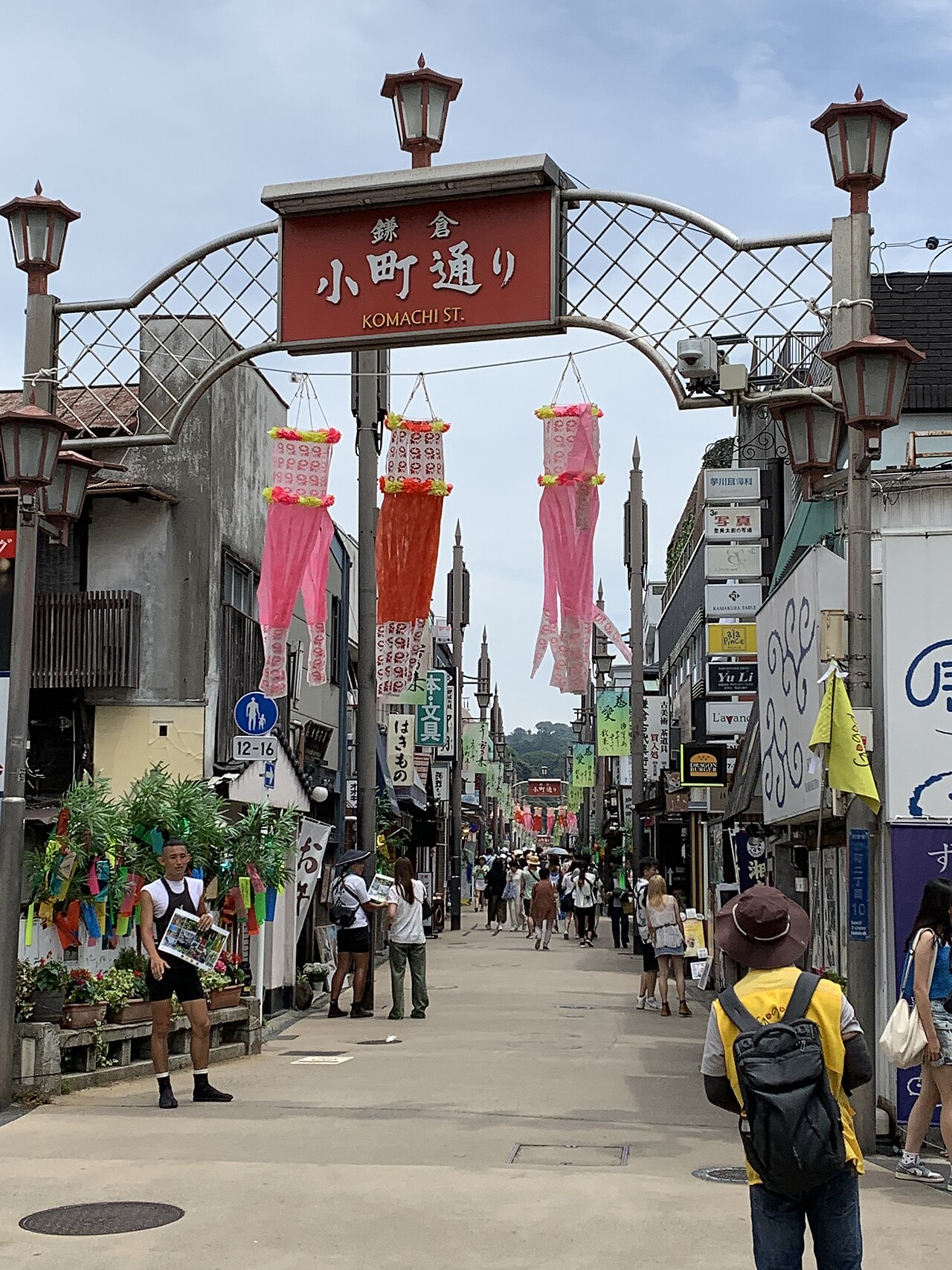
For the station-area version of the day, identify the museum's entrance and the route from Kamakura Station before departure. Komachi-dori can form part of that connection, but a shopping street is not a guarantee of a fully covered walk. Take appropriate rainwear and keep the map available without needing to expose your phone constantly.
Put the meal and museum in a sensible order for the day's admission window. If you arrive early, a short street walk and a meal may fit before the visit. If you arrive late, go to the museum first rather than spending the remaining admission time browsing shops. The compact route is deliberately flexible: you do not need to complete every lane to have enjoyed Kamakura.
Treat temple gardens as an optional weather decision
Rain can be part of a memorable garden visit, but it does not make every outdoor route suitable. Wet steps, uneven surfaces and longer approaches can change the experience for the group. Decide whether you want a short temple visit on that day or prefer to save it for a clearer forecast. Check the individual temple's access and visitor information instead of assuming that all grounds are equally easy to navigate.
Do not combine a station-area museum plan with a distant garden simply because both appear in a list of rainy-day attractions. Compare the full journey, including the return walk and any transfers. If the group needs a slower pace, one indoor stop with a meal is a complete option. Extra stops should remain optional rather than becoming a test of endurance.
Ben Richards introduces day-trip scenery as inspiration for choosing the Kamakura area. View original
Choose lunch as the second anchor
Find a meal that suits the group and lies close to the main route. In poor weather, a long queue outside can make a popular restaurant a bad fit even if the food looks appealing online. Save an alternative nearby and check the current service hours. A cafe visit may work as a rest, but confirm that it offers the meal you need before treating it as lunch.
Keep umbrellas and wet clothing out of other visitors' way when entering a small venue. Follow the establishment's storage arrangements rather than placing damp bags on empty seats. If travelling with a pushchair, check access with the restaurant directly. An indoor destination is not automatically spacious enough for every mobility requirement or large group.
Leave the coast and long combinations for a different day
The familiar Kamakura-and-Enoshima combination can be attractive in clear weather, but it is not compulsory for a rainy visit. A coast-focused outing and a compact cultural half-day ask different things of the traveller. Adding the beach or another town can turn a simple station-area plan into a sequence of wet approaches and waiting for transport.
Choose the experience you want before choosing the day-pass product. If you will remain near Kamakura Station, a ticket designed for multiple rides may not be useful. If you deliberately choose a different district, check the exact service, destination and last part of the walk. Keep the distinction clear between a route you have verified and an attractive place you have merely saved on a map.
Lovemari shares a Kamakura scene alongside this weather-led plan for a shorter visit. View original
Know when to shorten or change the visit
Check transport and local weather notices before leaving your accommodation. Ordinary rain and disruptive conditions are different situations. If services are affected, use the operator's current information to decide whether to travel. Once in Kamakura, shorten the walk if the group becomes cold, uncomfortable or tired rather than adding more stops to justify the journey.
Plan a clear return point: after the museum, after lunch or after one optional street loop. That decision makes it easier for companions with different interests to agree on the day. Keep the ticket, phone and any paper museum information protected from rain. If you have stored a bag, confirm collection before settling into a lengthy final cafe stop.
A practical wet-weather example
For example, two visitors check the museum calendar before taking the train. They arrive with one cultural stop and lunch as their priorities. Light rain allows a short Komachi-area walk before the museum; stronger rain would have meant going directly to the indoor visit. They decide against adding Enoshima because it does not serve the day's purpose. After lunch they choose between a brief local stroll and a straightforward train home, without having to abandon a complex chain of bookings.
A summer Kamakura journey offers a different seasonal perspective from a museum-led rainy day. View original
Questions before a rainy Kamakura visit
Is the Kaburaki Kiyokata museum open every day?
No. The official listing includes regular closures, holiday exceptions and exhibition-change closures. Confirm your date and last admission before using the museum as the anchor of the trip.
Can I stay completely under cover?
Do not assume that. A museum-led route reduces exposure but still includes outdoor connections. Check entrances and bring rain protection appropriate to the conditions.
Should I still add the Great Buddha or Enoshima?
Choose them only if their outdoor approaches and extra journeys fit what your group wants that day. They are different experiences from a compact station-area cultural visit, not compulsory additions.
What if the museum is closed?
Select another verified cultural venue from official visitor information or change the destination. Do not travel on the assumption that any museum in Kamakura will be open and interchangeable with the one you planned.
More Japan Video includes Komachi-area food and local rail travel as ideas to choose from when conditions allow. View original
 3 Hours of Rainy Day Walking Tour in Kamakura, Japan • 4K 60fps HDR
