
Nabegataki Falls: Book the Right Day and Plan the Walk Behind the Water
On this page
- Check the park notice before choosing a reservation
- Choose the option that fits your day
- Save admission details and separate them from transport
- Arrange the last road connection in both directions
- Understand the descent before leaving the entrance
- View the curtain from the front before going behind it
- Photograph changing light without chasing a guaranteed scene
- Leave time for the climb and a useful Oguni stop
- Questions before reserving
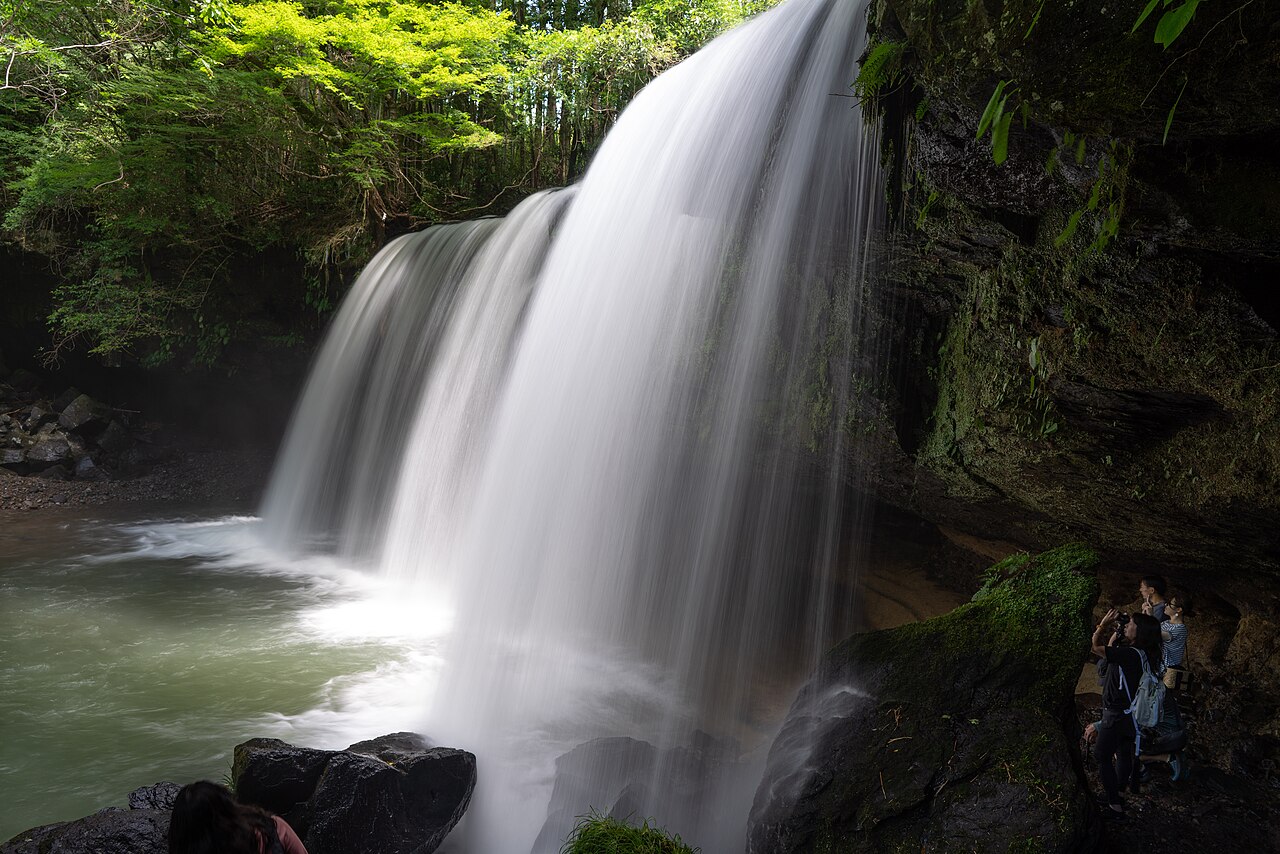

Plan Nabegataki as a reserved nature stop in Oguni, then check whether the route behind the waterfall is open on your actual day. The attraction is the broad curtain of water and the changing view around it. A successful visit starts earlier than the photograph: confirm the park notice, arrange the final road connection, save your admission details and leave enough energy for the stairs back up.
Check the park notice before choosing a reservation
The first decision is the date. Oguni Town posts both ordinary visitor information and temporary closures, so read the latest notice before making the waterfall the fixed centre of a driving day. A booking system can manage entry, but it cannot keep a natural site open during adverse conditions or maintenance.
For November 2026, the town lists temporary closures for tree work on November 13, 14, 17, 24, 25 and 28. Choose another day if your itinerary falls on one of those dates. Keep this dated notice distinct from the park's ordinary year-end closure. When planning a later trip, open the town's current announcement rather than assuming this list is the next season's calendar.
The official page asks visitors to book online. It also distinguishes dates with a complete reservation requirement and explains an assisted same-day route through the tourism association for people unable to book online. The practical choice for an international visitor is to use the town's linked booking information before travelling. Check availability for your actual party and day; do not treat the existence of same-day arrangements as a guaranteed place.
Choose the option that fits your day
| Your situation | Useful choice | Check before committing |
|---|---|---|
| Choose an open day | Read the latest park notice | Check reservation conditions; Save admission and transport details |
| Separate the walking decisions | Descend the signed path | Confirm river-area access; Keep the return climb in your plan |
| Finish without rushing | Leave time to climb back | Meet the arranged road connection; Continue to one Oguni stop |
Save admission details and separate them from transport
Once you have selected an open day, read the reservation instructions carefully. Keep the confirmation accessible on your phone and save the park's name in Japanese as well as English: 鍋ヶ滝. If more than one person is handling the itinerary, agree who has the admission details and who is arranging transport. A waterfall ticket and a taxi booking solve different parts of the journey.
Oguni Town does not accept telephone reservations for park admission. Calling a tourism contact can help clarify a question, but it does not replace the booking method shown on the official page. Read the conditions before purchase, especially if weather or a change elsewhere in your journey could alter the date.
Bring a way to view your confirmation without relying on a last-minute search through email. Save the official page and the exact meeting location as well. This becomes particularly useful when another person is driving or when a taxi needs to find you after the visit. Complete the practical preparation before descending to the waterfall, where you will want to focus on the path and water.
Japan.explores introduces Nabegataki’s curtain-like waterfall setting. View original
Arrange the last road connection in both directions
Nabegataki is in Oguni rather than central Kumamoto. Build the day around the actual road journey, not the prefecture name. The town's access information identifies a car or taxi connection from Oguni Yu Station, the roadside station and bus terminal rather than a railway station. Travellers arriving by public transport need to plan that final leg and the return separately.
For a taxi visit, confirm whether the driver will wait, return at an agreed time or require a new request. State a specific pickup point. Avoid a plan that assumes a taxi will appear at the waterfall parking area when you decide to leave. If you are combining the visit with an onsen stay, ask your accommodation about the journey you intend to make without assuming it includes a guest shuttle to the park.
Drivers should save the official approach and follow local signs. Narrow rural roads and the arrival process are part of the visit, so leave room around any chosen admission window. A map showing a direct line between two scenic places does not reveal how the connecting roads will feel. Choose one useful onward destination, then check that its own arrival requirements fit the waterfall stop.
Understand the descent before leaving the entrance
The town describes the walk from the park entrance to the falls as a short journey with stairs and steep sections. It also states that the waterfall cannot be seen from the parking area and that there is no wheelchair route to the falls. These details matter when deciding whether the visit suits every member of your group.
A short descent can feel easy at the beginning and more demanding on the way back. Keep a modest bag, wear footwear with reliable grip and leave your hands available where the path requires attention. If someone has a concern about steps or steep ground, resolve it before you enter. The famous view is not a substitute for a route that person can comfortably complete.
At the entrance, look for the latest instructions about the river area and any restricted sections. Ask staff about the route if the signs leave you uncertain. Decide on the path together rather than splitting up immediately to find separate photographs. This helps a mixed group enjoy the waterfall without making anyone feel committed to an uncomfortable branch of the walk.
Ichijikupai identifies Nabegataki as a favourite place to revisit. View original
View the curtain from the front before going behind it
Begin with the front or side view available on the permitted route. The broad fall and rock overhang are easier to understand when you first see the whole composition. Let your eyes adjust to the shade and notice where other visitors are walking. A still photograph can flatten the uneven ground and conceal how much spray reaches a particular position.
If the area behind the falls is open and the route suits you, continue according to the signs. The experience changes as you look outward through the moving water. Keep your camera or phone secure, pause where you can stand comfortably and let other visitors pass. The route behind a waterfall is a shared natural space, rather than a private photo studio.
Access to the park and access behind the water are separate questions. Oguni Town identifies falling rock and slipping risks in the river area and allows restrictions when conditions require them. If that branch is closed, enjoy the available views and respect the boundary. Do not let a video filmed on another day become an instruction to enter somewhere staff have closed.
Photograph changing light without chasing a guaranteed scene
Nabegataki's visual appeal comes from the relationship between water, shadow, rock and forest light. A wide photograph explains the shape of the curtain; a closer one can isolate patterns in the falling water. You can often make the visit feel more complete by varying your framing from permitted standing places instead of trying to reach every possible angle.
Keep a dry place for your phone and a cloth for the lens. Check a photograph only after you have stopped securely. If travelling with someone who is not interested in photography, agree on a small number of pauses and a clear place to meet. That keeps the visit enjoyable for both of you and prevents a simple scenic stop turning into an open-ended wait.
Older posts may show seasonal illumination or a particular light effect. Treat those as records of their own date. Daytime admission and evening programmes have different arrangements; use the ticket for the actual event and date. If an evening experience is essential, look for a dated operator announcement before building your accommodation or transport plan around it.
Japan Travel Gallery shares a credited Nabegataki photograph by naonao705410 and links to the photographer’s original post. View original
Leave time for the climb and a useful Oguni stop
Set the end of the waterfall visit before you take the stairs down. Work backward from your next confirmed appointment: a taxi pickup, accommodation check-in or another attraction's admission. Include the return climb and time to collect yourself at the entrance. A plan that uses every minute beside the water leaves no room for the least glamorous but necessary part of the outing.
After the waterfall, a meal or another Oguni stop can give the day a calmer rhythm. Choose it according to your next direction of travel. A scenic drive becomes less pleasant when you repeatedly cross the same area to chase unrelated pins. If the waterfall is your main priority, keep the addition flexible enough to shorten or skip if conditions change.
For example, a couple arriving by taxi could focus on the waterfall and then return to a confirmed lunch or accommodation plan. A driving group might use it as the main nature stop before continuing through the region. A visitor concerned about stairs may decide on another activity altogether. These are different successful itineraries, because each fits the people and transport involved.
Questions before reserving
Does everyone have to book online?
Start with the town's online reservation guidance. Its page explains complete-reservation dates and assistance for people unable to book online. Availability and the current calendar still govern your visit, so read those conditions before travelling.
Can I always walk behind the waterfall?
No. Check whether that particular area is open when you arrive. The park may restrict river-area access because of conditions even when other views remain available.
Can I see the waterfall from the car park?
The town states that you cannot. Plan for the descending visitor path and the climb back, including stairs and steep sections.
Is this an easy addition to a public-transport day?
It can work when the final road connection is arranged. Confirm both outward and return travel, then fit the reservation and walking time between them.
What should I check again on the morning of the visit?
Read the park notice, check the weather and road journey, confirm your admission details and verify the return arrangement. The attraction is a natural landscape, so those details are part of enjoying it well.
Japan Explorers introduces Nabegataki in an older high-resolution landscape video. View original