
Suizenji Jojuen by Tram: A Garden Circuit That Fits a Kumamoto Day
On this page
- What makes this a distinct stop
- Choose the option that fits your day
- Reach the entrance rather than the neighbourhood
- Admission and the usable visit window
- Make a pond circuit with deliberate pauses
- Tea and architecture deserve their own decision
- Combine Suizenji with one other Kumamoto anchor
- Practical questions
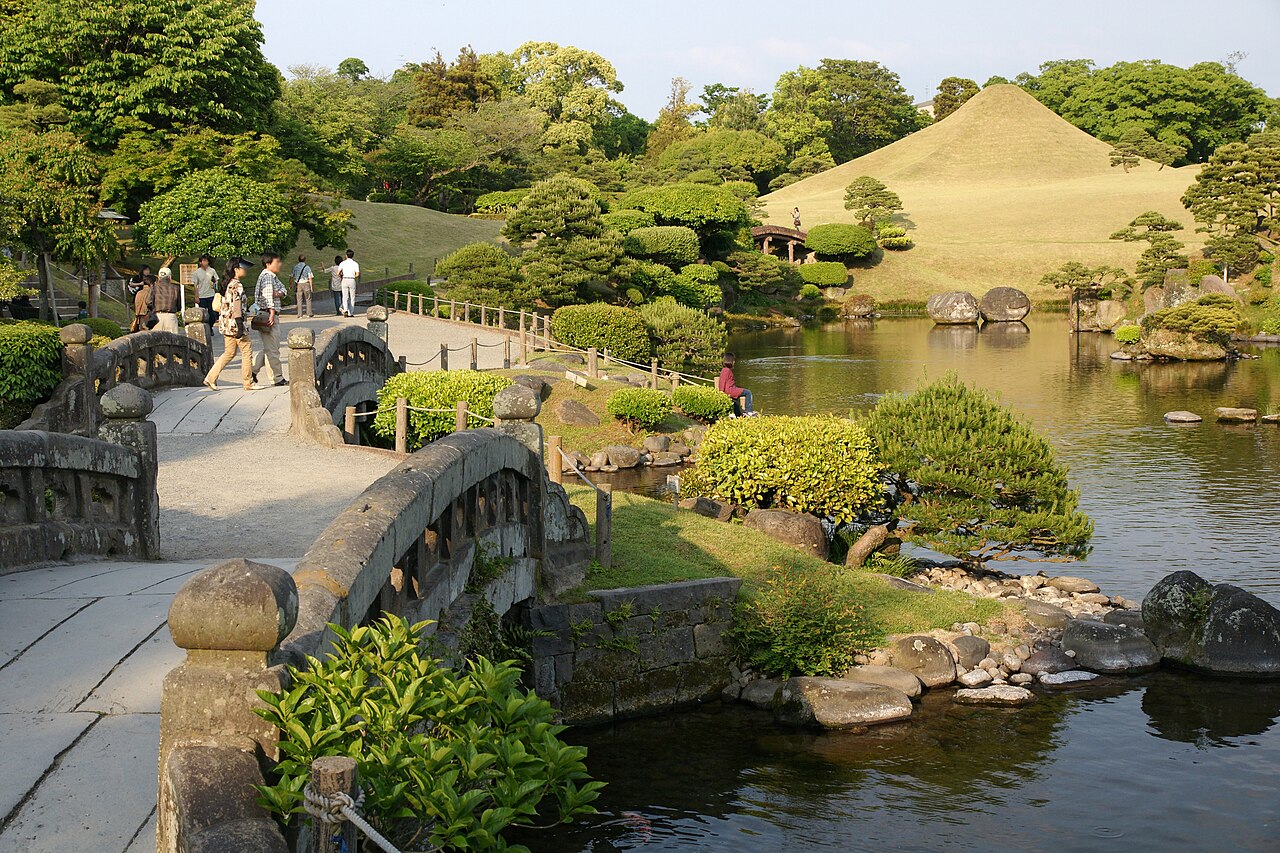

For a manageable Suizenji Jojuen visit, take the tram to Suizenji Park, walk to the actual garden entrance and make the pond circuit your main activity. Add a tea stop or shrine visit according to your interests rather than assuming every cultural experience is included in garden admission. This approach fits a Kumamoto day without turning the garden into a hurried photograph between unrelated attractions.
What makes this a distinct stop
Suizenji Jojuen is a strolling garden in Kumamoto, associated with the Hosokawa family. The official tourism bureau describes a pond supplied by groundwater from the Aso area, gently formed hills and scenery that recalls places along the historic Tokaido. Those features suggest a way to look: notice the relationship between water, landform and the paths, rather than searching only for the single mound that appears most often in photographs.
The garden also contains Izumi Shrine. A visit can therefore combine landscape and a place of worship, but the activities should remain distinct in your plan. If a festival, performance or organised programme interests you, check its own date and arrangements. An event photograph is a reason to investigate the calendar, not evidence that a performance is part of an ordinary walk on another day.
Choose the option that fits your day
| Your situation | Useful choice | Check before committing |
|---|---|---|
| Travelling on the city tram | Use Suizenji Park stop and walk to the gate | Save the return stop and direction |
| Arriving by JR | Use Shin-Suizenji and its longer final walk | Compare the complete connection, not just walking minutes |
| Tea is the main reason to visit | Check the named service before arrival | Let it replace part of the flexible circuit |
Reach the entrance rather than the neighbourhood
The garden's English site places Suizenji Park tram stop about four minutes away on foot. It also gives an approximately ten-minute walk from JR Shin-Suizenji Station. These are different arrival options, and the names are easy to confuse when reading quickly. Save your chosen station and the garden entrance as separate map points. A route search to the broad Suizenji district can put you near a restaurant or street with the same name instead of the gate.
Choose the tram when it connects naturally with your city itinerary; choose JR when your wider rail journey makes that approach convenient. Compare the complete route from the place you are leaving, including any transfer, rather than deciding from the shorter final walk alone. If you are carrying luggage, solve storage first. Bringing a large case through a strolling garden changes the outing into a problem that the garden itself is not intended to solve.
On the return, confirm the stop and direction that serve your next destination. It is easy to remember where you stepped off without checking where to board for the opposite journey. Photograph the relevant stop information or save it while planning. That small preparation is especially helpful if you leave after a long lunch, when your mental map of the arrival has already faded.
Kumamoto City Guide introduces the garden and its spring-fed water landscape. View original
Admission and the usable visit window
The current English visitor information lists opening from 8:30 to 17:00, with last admission at 16:30, and adult admission of ¥500. The operator also carries a fee-revision notice effective April 2026. This is a useful reason to consult the garden rather than relying on an older city map or a video description with a different price. The relevant budget is garden admission plus any tea, food or separately arranged experience that you choose.
Last admission is not a recommended arrival time for a relaxed visit. Leave space between arriving at the gate and closing for the circuit, a pause and any other activity that matters to you. If the garden is your day's priority, give it a useful daylight window instead of placing it after every other Kumamoto attraction. A shorter list of stops can produce a much fuller experience when you are able to linger by the water.
For groups, agree before buying tickets whether tea is essential, optional or something to decide afterward. That prevents one person from planning a quick loop while another expects a long cultural stop. The official garden and tourism links provide the factual basis; the allocation of your own time remains a choice based on the people travelling together.
Make a pond circuit with deliberate pauses
Begin with the overall pond view. Then follow the signed visitor paths and stop where the hills, trees and buildings form a different composition. A circuit is valuable because the same landscape changes as you move. It does not need to become a race to finish the loop. If one member of the group is particularly interested in photography, agree on a place to reunite so other visitors are not kept waiting on a narrow section of path.
Look for the contrast between the broad water surface and the carefully shaped land around it. You can enjoy that design without treating every hill as a literal map exercise. Keep to the visitor route and observe any restrictions on the planted slopes. What looks like a suitable place to stand in a distant photograph may be part of the garden composition rather than a public path. Let the intended viewing points do their work.
In hot weather, slow the pace and include water and a shaded rest. In damp conditions, use shoes with suitable grip and avoid assuming that a familiar city garden means uniformly easy footing. For a visitor with limited mobility, use the current map and ask about the actual route you intend to take. A scenic overview is not a substitute for checking slopes, surfaces and the location of a useful place to stop.
Giardini in viaggio identifies a Suizenji garden visit in Kumamoto. View original
Tea and architecture deserve their own decision
The tourism bureau identifies Kokindenju no Ma near the main entrance. If this building or a tea experience is important to you, investigate the current service and access arrangements rather than treating a social-media photograph as a reservation. A garden ticket does not by itself describe what is served, when a service operates or whether a group can be accommodated together. Keep those questions separate from the simple decision to take a walk.
You can also make tea a relaxed optional addition. Finish the landscape circuit, assess the queue and your remaining time, and then decide whether to stop. This is particularly useful when the day includes another fixed appointment. It allows you to enjoy the pond without repeatedly checking the clock for an experience that was never actually booked. If tea is the main reason for travelling, reverse that priority and organise the garden around it.
Leave room to look at the building in relation to the landscape, not only at the drink or dessert. A seated pause changes the scale of the outing: instead of moving from point to point, you watch a view stay still while light and people change around it. That is a useful complement to the circuit, provided you choose it deliberately and protect enough time to get back to the tram afterward.
Oniwastagram discusses Suizenji’s shaped hills and historic garden setting. View original
Combine Suizenji with one other Kumamoto anchor
Choose a second attraction that genuinely interests your group, then check the transport connection. Kumamoto Castle may be an obvious candidate, but it remains a separate visit with its own access and time demands. A garden morning and a city meal may be enough for a slower day. There is no requirement to add another paid attraction simply to make the itinerary feel substantial.
For a departure day, keep the last section straightforward. Collect bags before the service deadline, allow for the city-to-station connection and avoid using an uncertain restaurant queue as the final activity before a train. If the forecast worsens, shorten an optional stroll rather than spending the garden's useful window travelling to another outdoor place. A clear ending is what lets the earlier visit feel unhurried.
M’s FILM introduces a Suizenji garden walk; use current operator information for practical arrangements. View original
Practical questions
Is Suizenji Park the same arrival as Shin-Suizenji?
No. The former is the tram stop used in the garden's access information; the latter is a JR station with a longer final walk. Either can work. Use the route that connects well with your previous and next stops, and make sure everyone in the group saves the same meeting point.
Does admission include an organised tea experience?
Plan garden admission and a named experience separately. Check the provider, session and service before relying on it. A flexible tea break and a booked programme make different demands on the itinerary, even when both involve the same garden setting.
What should I do if I only have a short window?
Prioritise the pond circuit and a few good pauses. Leave a workshop, lengthy meal or additional city attraction for a visit with more room. Arrive well before the final admission time so the garden can be the experience rather than a dash toward the exit.