
Kurashiki Bikan Evening Walk: Canals, White Walls and a Comfortable Night Visit
On this page
- Arrive with time to see the change in light
- Choose the option that fits your day
- Keep the canal as the centre of the walk
- Separate evening scenery from daytime attractions
- Understand normal lighting and special events
- Put dinner close to the route
- Finish with the station or accommodation in mind
- A simple dusk-to-dinner example
- Questions about an evening in the Bikan district
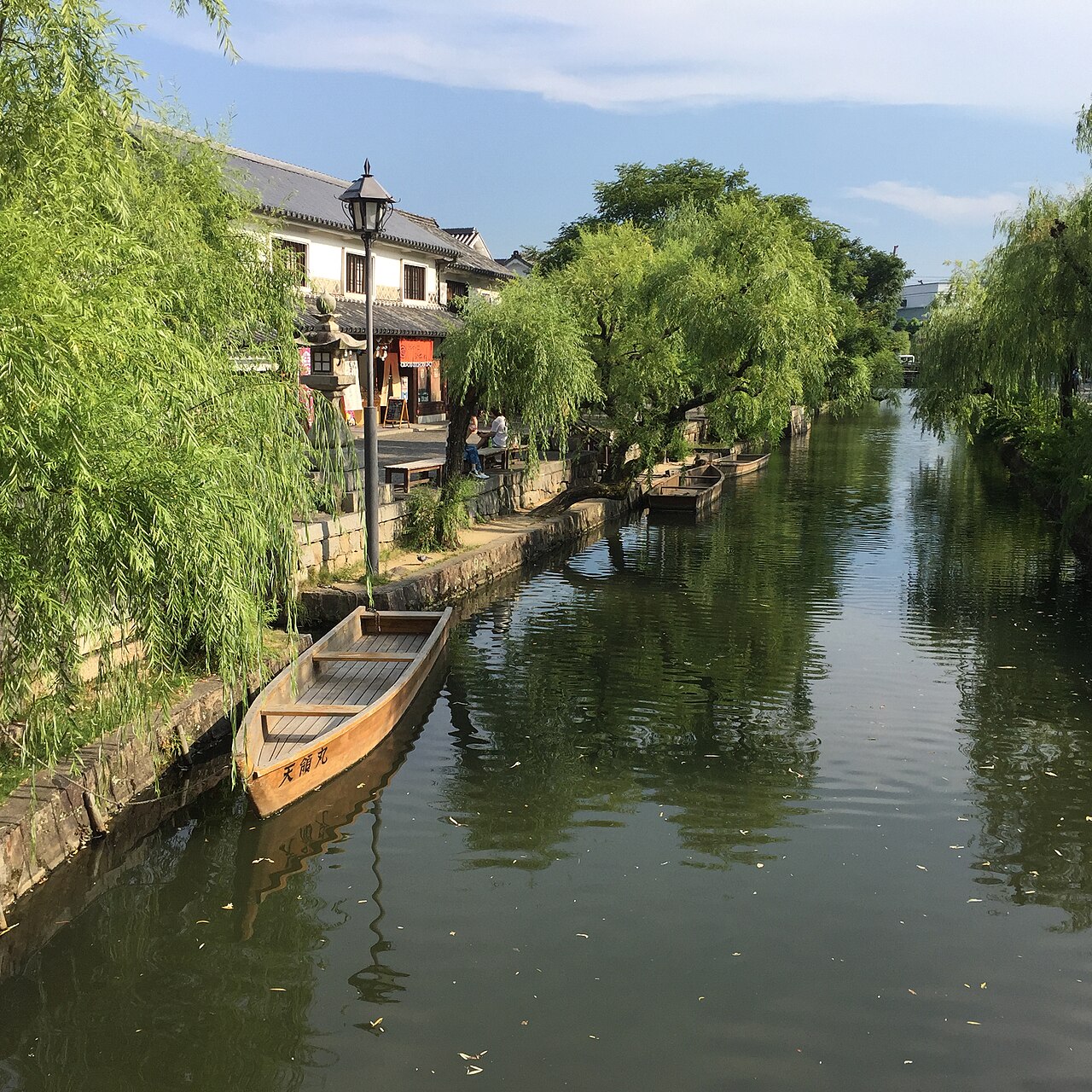
Stay in Kurashiki's Bikan Historical Quarter as daylight fades and the canal takes on a different character. The white-walled buildings, willow trees and reflections make the district a natural place for a short evening walk. Plan the outdoor scenery separately from museums, shops and boat rides, which have their own operating hours. The Okayama official tourism guide recommends the illuminated townscape, while JNTO's Bikan guide explains the historic district and its access. A compact canal circuit with a nearby dinner is a useful starting point.
Arrive with time to see the change in light
Choose your arrival around the actual sunset for your date. Starting in daylight makes it easier to find the canal, recognise your route back and see the architecture before the lighting becomes the main attraction. You can then revisit a favourite view after dusk without treating the whole district as a timed photography course. Winter and summer evenings need different plans, so use the day's light rather than a fixed hour copied from a travel video.
The prefectural tourism guide places the district within walking distance of JR Kurashiki Station, giving a broad walking estimate of ten to fifteen minutes. Allow additional time for your particular exit, bags and companions. If you are checking into accommodation first, make that part of the route instead of carrying the suitcase through the narrowest streets while looking for a room.
Choose the option that fits your day
| Your situation | Useful choice | Check before committing |
|---|---|---|
| You want the change from day to night | Arrive before dusk and revisit one canal view | Use your actual date’s sunset rather than an old video’s clock time |
| A museum or boat ride is essential | Plan that activity in its own operating window | Do it before the evening walk if the current service requires |
| A train home is fixed | Choose dinner near the return route | Include the station walk and baggage collection |
Keep the canal as the centre of the walk
Begin with the canal-side streets and choose one short extension into the adjoining old-town lanes. This gives the walk a clear shape: find the water, enjoy the white walls and bridges, then explore a side street before returning. The district's appeal comes from these relationships rather than from reaching a long list of isolated photo pins. Notice how the same building looks from the opposite bank and how reflections change as the sky darkens.
Keep public paths clear when stopping for photographs. Cross at the available bridges and avoid stepping into entrances or private space to recreate an image. For a group, agree on a meeting point beside an obvious landmark before anyone pauses for longer. A relaxed circuit works better when companions know whether they are waiting or continuing to the next bridge.
Separate evening scenery from daytime attractions
The district contains museums, shops, cafes and boat-related experiences, but each is a separate visit. If the Ohara Museum of Art or a particular shop is important, check that venue's current opening and last admission before deciding when to arrive. An evening walk should not become a disappointment because all the indoor experiences were left until the lights came on.
A practical order is to make the indoor visit earlier, take a break and then return to the canal for dusk. If you prefer a shorter outing, choose dinner and the walk as the two main experiences and save the museum for another visit. The existence of a canal boat in a social photograph is also a reason to research the boat service independently, rather than assume it operates at night.
Adam Martindale introduces the canal and willow-lined streets as a daytime counterpart to the evening walk. View original
Understand normal lighting and special events
Kurashiki's illuminated townscape and its seasonal festivals are different reasons to visit. A photograph may show the ordinary evening scenery, a special lantern installation or an event with limited dates. Look up the official programme if the installation itself is what you want to see. For a general evening, choose the canal and historic streets so that the visit remains rewarding without a particular festival.
You can make a strong set of photographs by returning to just a few viewpoints as the light changes. Try a wider view across the water, a closer architectural detail and a street scene from a public path. This creates variety without needing to chase every image seen online. Leave space for people using the district normally, especially around restaurant entrances and narrow bridges.
Put dinner close to the route
Choose a meal within a comfortable walk of your evening circuit and check its actual service hours. A cafe that is convenient in the afternoon may not provide dinner, and a popular small restaurant can fill quickly. If a particular meal matters, arrange it first and plan the walk around the booking. Otherwise, save two nearby options so a queue does not send the whole group back toward the station unexpectedly.
Think about whether you want to eat before or after dusk. An early dinner can suit children or an evening with a later train; a meal after the walk can suit an overnight stay. Keep the final part flexible. One good canal circuit followed by a comfortable meal is a coherent visit, even when you have not entered every shop you passed.
JR West presents the Bikan canal and historic buildings, helping you choose the scenery that interests you. View original
Finish with the station or accommodation in mind
Before the final photographs, check the route to the place where the evening ends. If you are taking a train, use the connection that reaches your actual destination, including any transfer at Okayama. If you are staying locally, save the accommodation entrance and any check-in arrangements. The last walk feels easier when you know exactly where you are going next.
Collect stored bags before the relevant service closes and include that task in your return margin. Choose shoes appropriate to walking and take a layer for the forecast. If rain or wind makes the canal-side section uncomfortable, shorten it and bring dinner forward. You can preserve the atmosphere of the evening without insisting on every planned photograph.
A simple dusk-to-dinner example
For example, two visitors arrive while the old streets are still bright enough to explore. They complete a museum visit first, take a short break and then walk beside the canal as the lights become visible. After one side-street extension they return to the water, take their final photographs and go to a restaurant already marked nearby. They leave their onward rail connection visible in the plan, so the evening ends with a comfortable walk rather than a hurried departure.
Kurashiki’s official tourism account introduces the white walls and waterway at the centre of this route. View original
Questions about an evening in the Bikan district
Can I combine a museum and the night walk?
Yes, by planning their time windows separately. Check the museum's current last admission, visit it first and leave the outdoor canal circuit for dusk. Allow a break between the two if that suits your group.
Is every photograph online part of the normal lighting?
Some show special events. Identify the event and its dates when a particular installation matters to you. For a general visit, the canal, bridges and historic buildings can remain the centre of the evening.
Should I reserve a boat ride for the evening?
Read the actual boat operator's current offer before building it into the route. Treat the boat ride as its own activity with an operating window, rather than infer availability from a daytime picture.
Can I visit without staying overnight?
Plan backward from your useful train connection and include dinner, walking and baggage collection. An overnight stay allows a slower finish, but a short evening can also fit a day trip when the return has been checked.
Joanne-Marie shares a family visit to the Bikan quarter, with the townscape as the visual focus. View original
 2 Hours of Heavy Snow Night Walk in Tokyo, Japan • 4K HDR
 Evening walk around seaside town of Kamakura, Japan • 4K HDR
 Okayama & Kurashiki🇯🇵 Explore Japan's Castle City and Dreamlike Canal Town | 4K
