
Nara Luggage Storage: Choose JR Nara or Kintetsu Nara Before Walking to the Park
On this page
- Two station names, two different collection plans
- Choose the option that fits your day
- Use the JR Nara information-center service precisely
- Pack the things you need around the deer
- Choose a park route that returns naturally to your bag
- Account for queues, wet weather and tired legs
- Have an alternative before the counter says no
- A station-to-park decision example
- Questions about storing luggage in Nara
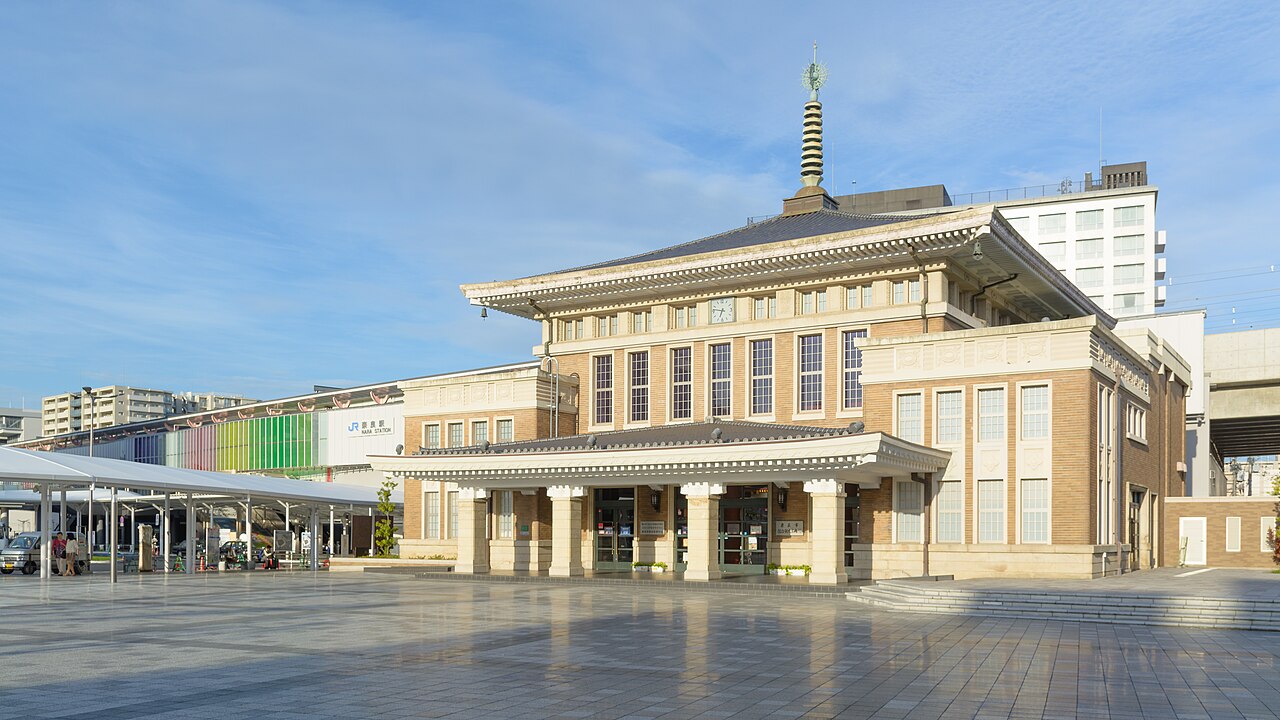

Start a Nara luggage-storage plan by identifying your arrival and departure stations. JR Nara and Kintetsu Nara are different locations, so a bag left beside one does not automatically fit a journey leaving from the other. The Nara City Tourism Association offers staffed luggage storage at the Nara City Tourist Information Center near JR Nara Station. For a park visit, decide whether you will return there before choosing where to leave your suitcase. The association's service information gives the current counter location, collection hours and size categories.
Two station names, two different collection plans
Write the railway company and station name into your itinerary instead of recording only Nara Station. This matters when you arrive on one line, walk through the city and leave on another. Your bag does not follow that change of plan. A direct onward train from a different station can lose its appeal if it means walking back across town to retrieve the case first.
Before paying for storage, sketch the return journey. If you intend to depart from JR Nara, a service beside that station may be a useful anchor. If Kintetsu Nara is your intended departure point, compare facilities around that station and confirm access conditions directly. Do not treat a map pin for tourist information as proof that every information center offers the same luggage service.
Choose the option that fits your day
| Your situation | Useful choice | Check before committing |
|---|---|---|
| Arrive and leave at JR Nara | Check the association service near JR Nara | Keep baggage collection inside its published hours |
| Arrive JR, leave Kintetsu | Compare both ends before storing | Include the journey back to the bag in the railway decision |
| Long park visit with children | Choose a short final loop toward collection | Leave room for slower walking, rain and belongings |
Use the JR Nara information-center service precisely
The city association identifies its storage location as the Nara City Tourist Information Center at 1082 Sanjohonmachi, near JR Nara Station. Its published luggage-service hours are 09:00–18:00. Read those hours as the window for the baggage service, not as permission to collect whenever another part of the building remains open. Check current notices before relying on the desk for a late departure.
The association also publishes size-based charges. Compare your bag against its measurement categories rather than deciding by how large it looks beside someone else's suitcase. If you have several bags, ask whether each item is charged separately and confirm what the receipt covers. Keep the operator's own explanation as the authority if a travel blog gives different prices or collection arrangements.
Pack the things you need around the deer
A large suitcase is inconvenient for a park walk, but your day bag also deserves attention. Carry only the food and equipment you will use, keep packaging secure and avoid leaving small belongings loose on the outside. The deer are part of the park environment rather than trained performers. A luggage-storage decision should make it easier to manage your possessions and move calmly, not encourage you to leave a bag unattended for a photograph.
The official Nara travel tips provide broader travel and luggage information. Use those practical sources alongside a city map. A creator's attractive park image can help you decide what scenery appeals to you, but it cannot tell you whether today's storage desk has room or whether a particular locker accepts your case.
Kai Travel Guide introduces the Wakakusayama area as one possible destination after storing luggage. View original
Choose a park route that returns naturally to your bag
Once the suitcase is stored, choose a walking route that ends in the direction of collection. You do not need to retrace every street exactly, but the last part of the visit should not depend on a hurried crossing of the city. Put the final temple, cafe or souvenir stop on the map together with the storage point. The route becomes easier to judge when those places are visible at the same time.
If the group separates, agree on a meeting point before the receipt holder leaves. Tell everyone whether the bags are at an information center or a locker bank and which railway station is relevant. A photograph of the collection sign can help, but do not circulate personal details on the receipt in a group chat wider than necessary.
Account for queues, wet weather and tired legs
The walk back often feels different from the walk out. You may be carrying purchases, travelling with a tired child or dealing with rain. Leave room for that change when planning the final stop. A reasonable baggage plan protects the collection time even if one attraction takes longer than expected. It does not depend on every member of the group maintaining the morning's walking pace.
In wet weather, keep your claim ticket protected and consider shortening the park loop. If you expect to use a bus for part of the return, check the boarding location and current service rather than assuming any bus near the park reaches your storage point. Allow time to find the right side of the road. Your goal is to collect calmly and then make the railway connection, not to combine both into a single last-minute dash.
Mingbi shares a Nara Park deer scene from the sightseeing part of the visit. View original
Have an alternative before the counter says no
Storage depends on acceptance and available space. A station-area service is useful precisely because it is easy to understand, but that does not make every bag automatically acceptable. Check restrictions on unusual items, valuable contents and overnight storage with the operator. If your schedule requires collection outside the advertised window, choose a different arrangement before leaving the suitcase.
For a day trip, consider travelling with a smaller bag if the rest of your itinerary allows it. For an overnight stay, ask the accommodation about its own policy and location. Do not make an unconfirmed hotel storage promise part of the plan. If you cannot find an arrangement that fits the departure, reduce the walking programme instead of leaving baggage somewhere unofficial.
A station-to-park decision example
For example, a traveller arrives at JR Nara with a suitcase and initially plans to leave from Kintetsu Nara. Before storing the bag, they compare the full return route rather than only the next train time. They may keep JR Nara as both arrival and departure, or locate a verified option closer to their intended departure station. Either choice is more coherent than storing first and discovering the mismatch after a long park walk. Their sightseeing order is then built around the collection point they actually chose.
This family deer-feeding video shows why a park visit is easier to plan separately from carrying a large suitcase. View original
Questions about storing luggage in Nara
Does every tourist information center store luggage?
Do not assume that. The association names a specific service near JR Nara Station. Confirm the exact facility and its current terms rather than transferring that offer to another information desk.
Can I collect after the published baggage hours?
Plan within the service's stated collection window unless the operator explicitly confirms another arrangement. A train leaving later in the evening does not extend the storage counter's hours.
Should I choose storage before choosing my departure station?
Choose them together. The best place to leave the bag is one that fits both the park route and the railway journey afterward. A convenient arrival point can be an inconvenient collection point if the route changes.
What if the weather turns bad?
Shorten the sightseeing loop and protect the return margin. Keep the bag receipt dry and check the actual route back. It is better to miss one optional stop than to finish the day with a difficult baggage collection.
Johnny Strides takes a park walk that helps visualise a Nara visit after baggage collection has been planned. View original
Travel videos from All Japan
Popular YouTube posts
 Japanese Bullet Train Speeds Through Station at 320km/h! This is insanely fastDa ContentYouTube · 7,398,242 views
 Pikachu Paradise! Riding the Pokémon Train in Japan 🚞Experience JAPANYouTube · 5,151,884 views
 Japan’s Unexplored Region | Train Trip on an Emerald Green Lake in Shizuoka | JAPAN TRAVEL VLOGUnique Japan TravelYouTube · 3,024,509 views
 First Class on Japan's Bullet Train Shinkansen - Tokyo to Kyoto (unusual route)ST TravelYouTube · 2,333,387 views
 Riverside Train Ride in Gifu, Japan / 8K 60fps HDR / Calm Piano + Natural AmbienceAbao VisionYouTube · 2,234,014 views
 Riding Japan’s Famous Bullet Train in First Class | Tokyo to Kyoto Shinkansen 🚄Luxury Travel HostYouTube · 1,191,796 views
 2 Days in TAKAYAMA, Gifu ❄️ Snowy Getaway in a Peaceful Mountain Town | JAPAN TRAVEL VLOGMei TimeYouTube · 1,064,309 views
 First Class on Japan's Bullet Train - Hokuriku Shinkansen | Tokyo to OsakaLuxury Travel ClubYouTube · 1,016,495 views