
Ryuzu Falls by Bus: Choose the Viewpoint Before the Longer Walk
On this page
- Find the bus that serves Ryuzu-no-taki
- Choose the option that fits your day
- Start with the lower waterfall view
- Add the riverside path only when it suits the group
- Keep a waterfall stop separate from a Senjogahara hike
- Read seasonal photographs with the altitude in mind
- Give the tea stop a clear role
- Build a return plan before adding another waterfall
- Compare several visual perspectives
- Questions before boarding
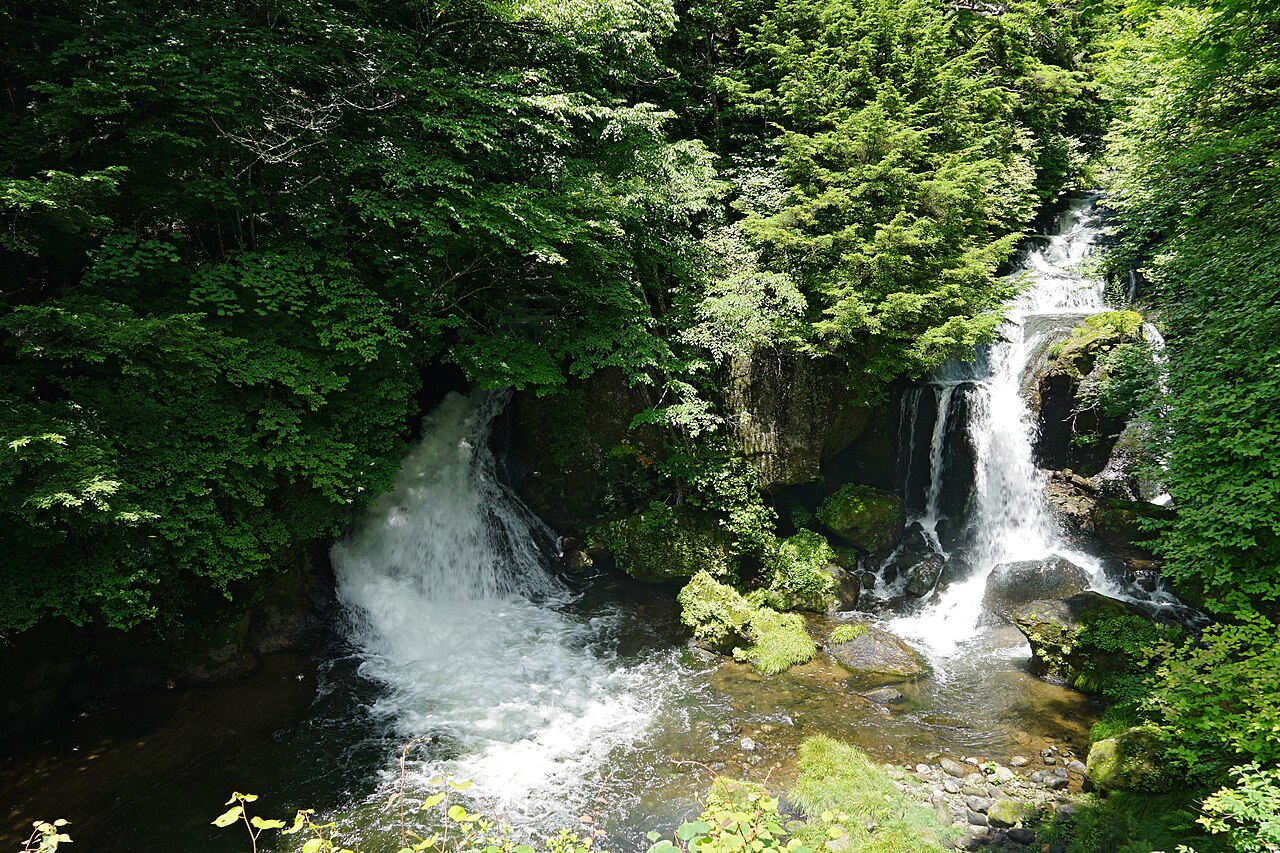
For a first visit to Ryuzu Falls, take a bus that actually reaches Ryuzu-no-taki, see the divided cascade from the lower viewing area, and decide afterward whether to walk beside the river. This keeps a short waterfall stop distinct from a longer Oku-Nikko hike. The essential planning work is the bus destination, the amount of climbing you want, and the connection that brings you back from the mountains.
Find the bus that serves Ryuzu-no-taki
Ryuzu Falls is in Oku-Nikko, beyond the central shrine-and-temple district. The official Nikko guide describes access from JR Nikko or Tobu-Nikko stations by bus, followed by a short walk from the Ryuzu-no-taki stop. Save that exact stop and inspect the current operator route map before boarding. A bus heading toward the mountains may still terminate before your destination.
In particular, distinguish a service continuing toward Yumoto Onsen from one ending at Chuzenji Onsen. Tobu's current route information is the right place to check which departure reaches the falls. Read the destination display and confirm the stop if you are uncertain; it is easier to resolve that question at the station than after an unexpected terminus.
The official destination introduction gives roughly an hour from the Nikko stations under its stated conditions. Use that as orientation, not a guarantee for a particular journey. Your actual day also includes the wait for the bus, boarding, traffic and the walk at the other end. Autumn road congestion can make a tightly connected itinerary especially fragile.
Choose the option that fits your day
| Your situation | Useful choice | Check before committing |
|---|---|---|
| Main priority | Choose a bus serving Ryuzu-no-taki | Use the named station or current operator notice |
| Optional extension | Optional riverside steps | Choose the effort and availability separately |
| Comfortable finish | Margin before the onward train | Include the complete return journey |
Start with the lower waterfall view
The name Ryuzu refers to a dragon's head, associated with the way a large rock separates the water at the lower falls. The official Tochigi introduction describes a cascade stretching along volcanic rock rather than one isolated vertical drop. Seeing the lower divided flow first gives you a clear visual anchor for the rest of the visit.
Follow the visitor signs from the bus stop to the viewing area. Take a moment to look at both branches of water, the central rock and the surrounding trees before raising the camera. The scene is compact enough that a crowded viewpoint can feel busy, but it rewards a little patience. Let people finish their photographs and move through the space in turn.
A short visit can stop here. If your group wants a waterfall view and a seated break rather than a walk with steps, make that the plan from the start. You do not need to climb alongside the river to justify coming. The lower composition is a different experience from the upper river and can be the central attraction in its own right.
Weathercaster Tsukasa Yoda records an October 2022 visit focused on the autumn leaves at Ryuzu. View original
Add the riverside path only when it suits the group
The path beside Ryuzu Falls lets you follow the changing character of the water upstream. The tourism information describes steps along this route, so assess it as a climb and descent rather than a level extension of the viewpoint. Look at the surface and the weather, and decide how much of the path everyone wants to tackle.
Walking beside the cascade changes the view from a single framed scene to a sequence of moving water, rock and trees. Stop where there is space to stand comfortably, then continue with your eyes on the path. A person concentrating on a phone can miss a step even on a short walk. Wet leaves, rain or cold conditions can change the footing substantially.
Before climbing, identify how you will return to the bus. If you intend to descend to the lower stop, include that descent in your time. If a current map suggests another stop for your chosen route, confirm that stop's direction and service rather than assuming buses are interchangeable. A clear end point makes it easier to enjoy the river without repeatedly checking the clock.
Keep a waterfall stop separate from a Senjogahara hike
Ryuzu appears on wider Oku-Nikko hiking itineraries, including routes involving Senjogahara and the lakeshore. Those are appealing possibilities, but they change the purpose and preparation of the day. A visitor arriving for the lower viewpoint should not drift into a longer hike simply because a path continues beyond the falls.
For a hiking day, use the current official hiking map, choose a complete route and check seasonal trail information. Identify the start, finish, available facilities and public-transport return. Carry the clothing, water and food appropriate to that walk. The official Nikko story about the Lake Sainoko and Senjugahama route shows how Ryuzu can form one part of a broader landscape journey.
For a sightseeing day, keep the extension modest and choose one additional stop that shares a useful transport connection. A lakeside pause near Lake Chuzenji and a short waterfall visit can sit together comfortably when the bus plan supports them. Trying to fit a marshland hike, several waterfalls, a cruise and central Nikko temples into one tight day gives each experience too little room.
Mirumiru Land introduces the lower divided falls and the teahouse setting. View original
Read seasonal photographs with the altitude in mind
Ryuzu's trees are a major reason the falls attract photographers. The official Nikko guide highlights late-spring flowering and autumn colour, while the prefectural introduction explains the appeal of the red and purple blossoms around the cascade. Those broad seasonal descriptions help you choose a trip, but they cannot tell you the exact state of the vegetation on one future morning.
Oku-Nikko sits in a different mountain environment from central Tokyo, and even places within the Nikko area do not share one flowering or leaf-colour date. Compare current local updates for the place you are visiting rather than using a photograph from a city park as your timing reference. If the leaves have already fallen, the rock and water can still provide a strong visual subject.
Bring a layer suitable for standing still at the viewpoint, not only for moving uphill. When cold or icy conditions are possible, check the actual path situation before committing to the riverside climb. A winter scene in a video is visual context, not proof that every step and path will be suitable for your group on arrival.
Mamun Chowdhury introduces Ryuzu and the upstream walking perspective in a 2022 video. View original
Give the tea stop a clear role
Ryuzu is associated with a teahouse beside the lower viewing area. A meal or warm drink can add a pleasant pause, especially after traveling up from the stations. Check the business's current opening information and menu before making a particular dish the reason for the trip. A nearby viewpoint and a restaurant operate as related but distinct parts of the visit.
If you want to sit down, decide whether to eat before or after the riverside walk. Eating first works when the group arrives hungry and wants a relaxed start. Walking first can suit visitors who want to use the available daylight for the cascade. Either order is easier when you have already saved the next bus departure and know how much flexibility remains.
Keep your expectations about the view proportionate to the seating actually offered. The view changes between tables, so choose your seat from the options actually available. Let the waterfall viewing area provide the main visual experience and treat the tea stop as a chance to rest. That leaves you less dependent on a particular table being free.
Build a return plan before adding another waterfall
Kegon Falls, Ryuzu Falls and Yudaki are often grouped in Oku-Nikko introductions, but they occupy different locations. Seeing all three requires decisions about transport, walking and available daylight. Start with the one that matters most, then inspect the actual bus connections before extending the itinerary.
For a first visit centered on Ryuzu, choose a return departure with enough margin for the descent and any stop at the teahouse. Check the correct side of the road for travel toward Nikko, and allow time to reach it without hurrying across traffic. If you have an onward reserved train, include the mountain bus journey and the final station approach in your calculation.
A missed optional stop is easier to absorb than a missed train or an uncomfortable walk after daylight fades. Keep one part of the day flexible: the length of the riverside climb, the tea stop, or a second attraction. Decide which part can shrink before you need to make that decision under pressure at a crowded bus stop.
Compare several visual perspectives
The lower split cascade, the upstream rushing water and the surrounding seasonal trees can look like different places in social posts. Use that variety to decide what you most want to see. A driving video may supply landscape context, while a walking record can reveal the rhythm of the visit. Neither replaces the current bus timetable or the trail signs.
Come Come NIKKO compares Ryuzu with Kegon and Yudaki; its older parking and price details are separate from current travel planning. View original
Questions before boarding
Will every bus to Lake Chuzenji reach Ryuzu Falls?
Check the destination and route. A service terminating at Chuzenji Onsen does not automatically continue to Ryuzu. Choose a departure that lists Ryuzu-no-taki on its current route.
Do I need to walk the whole riverside path?
No. The lower viewing area can form the main visit. The path alongside the cascade adds steps and a different perspective, so choose it according to the group's comfort and the conditions.
Can I continue into a longer Oku-Nikko hike?
Yes, if you plan a complete route using current maps and trail information. Treat that as a hiking itinerary with its own equipment and return connection, rather than an unplanned extension of a short waterfall stop.
 Nikko🇯🇵 Japan's Sacred Mountain World of Golden Shrines and Giant Cedars | 4K
 Tokyo Side Trip to Nikko
