
Harajiri Falls on Foot: Choose the Bridge View Before the Full Circuit
On this page
- Start with the landscape, then choose your route
- Choose the option that fits your day
- Reach Harajiri from Ogata or a wider Oita road trip
- Use the suspension bridge for the broad composition
- Decide whether to continue around the falls
- Let the roadside station support the visit
- Choose the season without demanding a particular photograph
- A practical order for a first visit
- Questions before you go
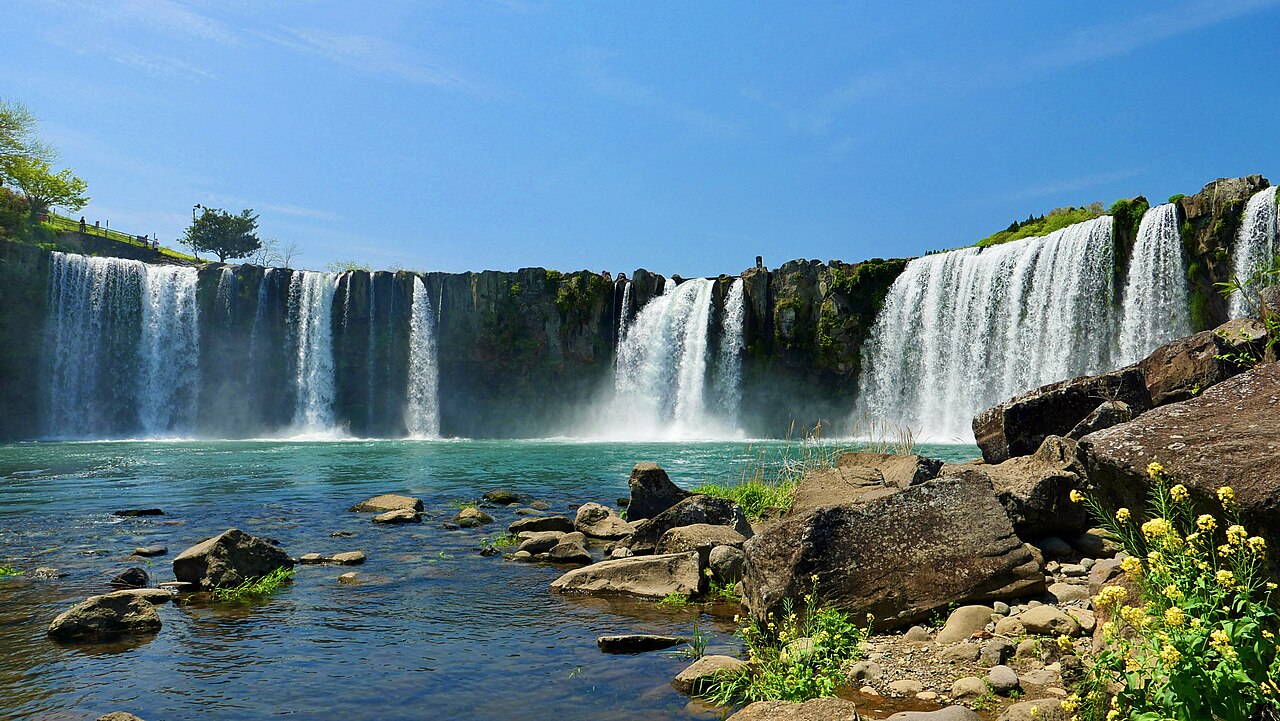
Build a Harajiri Falls visit around the wide, frontal view from the downstream suspension bridge, then decide whether the rest of the walking circuit suits your group. The waterfall sits beside farmland in Bungo-Ono, with a roadside station close to the visitor approach. That setting makes a short scenic stop possible, but it also rewards a slower circuit if you have arranged the return to Ogata Station or your next driving stop.
Start with the landscape, then choose your route
Harajiri is striking because the waterfall interrupts an otherwise open agricultural landscape. You do not first hike deep into a mountain gorge and then discover a narrow cascade. You arrive in a rural setting and encounter a broad break in the river. The contrast between fields, flowing water and the sudden drop is the most useful idea to keep in mind when choosing viewpoints.
The official Oita tourism page identifies a downstream suspension bridge, a promenade toward the top and a route toward the riverbank. These are different ways to experience the same landscape. A photograph taken near the water does not tell you whether that route is open or comfortable on your visit. Start by reading the local signs and seeing how the paths connect, rather than treating every visible rock as part of a walking trail.
For a first visit, make the bridge outlook the anchor. Give everyone the chance to see the width of the waterfall before deciding to continue. If someone dislikes suspension bridges, do not make crossing a condition of enjoying the outing. Look for a comfortable permitted viewing position on the approach side, and agree whether the group will remain together or briefly split and reunite.
Choose the option that fits your day
| Your situation | Useful choice | Check before committing |
|---|---|---|
| Start with the broad view | Arrive at the roadside station | Read the visitor-route signs; Choose the downstream bridge outlook |
| Add another perspective | Check open paths and footing | Choose upper or lower viewpoints; Return before your transport deadline |
| Finish the rural outing | Rest at the roadside station | Confirm the Ogata connection; Continue to one onward destination |
Reach Harajiri from Ogata or a wider Oita road trip
JR Ogata Station is the useful rail reference for Harajiri. The prefectural tourism page describes the final journey from the station by car; a railway arrival therefore needs a separate local connection. Confirm how you will make that last leg before choosing a train. A taxi arrangement, a planned walk and a private car each produce a different amount of usable time beside the falls.
Do not mistake a short drive for a short walk. The road distance, available footways and weather matter more than the impression of closeness on a small map. If you intend to walk, examine the actual route and include both directions in your day. If using a taxi, settle the pickup location and return arrangement while you still have a clear meeting point, rather than assuming a waiting vehicle will be available at the waterfall.
Drivers can use the roadside station as the practical arrival reference. Save its actual parking approach, put away navigation before leaving the vehicle and check the signs for the waterfall paths. On a wider journey through southern Oita, decide whether this is your main nature stop or a shorter break between destinations. That decision makes it easier to resist adding a long meal, another viewpoint and an extra shopping stop to an already tight day.
Tourism Oita introduces the waterfall and the surrounding flat landscape. View original
Use the suspension bridge for the broad composition
The bridge gives a different reading of Harajiri from an upstream view. From downstream, you can understand the spread of the falling water and the curve of the rock face. Pause before the bridge and decide how much time you want for looking, crossing and returning. You may prefer simply to absorb the panorama before taking photographs.
A shared bridge is a passage as well as a viewpoint. Keep your bag close, let other visitors pass and choose a moment to photograph without holding up the crossing. If a companion feels uneasy, move to a comfortable place to talk before you begin. The best route for the group is the one everyone can complete calmly; it need not reproduce the route in a travel video.
For photographs, try a wide frame that includes the surrounding land, followed by a closer composition of the water. Including a little of the landscape explains why this waterfall feels different from a forest cascade. Changing the framing is more useful than trying to find an unprotected position closer to the edge. Look for the permitted viewpoint that produces the picture, and move only when your footing and route are clear.
Decide whether to continue around the falls
After the bridge view, assess the remaining circuit as a separate choice. You have already seen the principal panorama. Continuing is worthwhile when the paths are open, the ground suits your footwear and you have enough time to finish without hurrying. Returning from this point is a perfectly coherent short visit, especially if a train or taxi appointment governs the afternoon.
The upper perspective explains how the river passes through the flatter landscape before dropping. Keep to the visitor route and respect the separation between a path and the waterfall edge. The ability to see an attractive position does not make it a place to stand. Water, rock and the drop can look deceptively gentle in a still photograph.
A lower viewpoint changes the scale again, bringing the sound and movement of the water closer. Before descending, think about the climb or steps required to return. A member of the group who is comfortable crossing the bridge may still prefer not to take the lower branch. Make this decision before people scatter onto different paths. Agree on a clear reunion point, and keep the route back to the roadside station easy to explain.
A separate Tourism Oita post describes the broad cascade and bridge perspective. View original
Let the roadside station support the visit
The nearby roadside station gives this waterfall outing a useful practical base. The official prefectural page describes local produce, regional food and refreshments there. Treat a meal or shopping stop as its own part of the outing, with time to sit down and prepare for the next journey. Do not rely on an outdoor viewpoint and a restaurant sharing identical availability.
A sensible order is arrival, a first look at the paths, the chosen waterfall circuit and then a food or rest stop. This puts the landscape first while daylight and energy are available. If someone needs food immediately, reverse that order deliberately and shorten the walking option. The important point is that the group has chosen the tradeoff together, instead of discovering it when a return connection is already close.
For a driving day, use the rest stop to check the next destination and its admission or arrival deadline. For a rail day, review the station connection before ordering. A relaxed lunch is easier to enjoy when everyone knows whether the taxi is coming, where it will stop and how much time remains before the train. Keep purchases manageable if you are returning on foot.
Choose the season without demanding a particular photograph
Harajiri changes with water conditions and the surrounding agricultural landscape. The tourist-board page introduces spring flowers, summer greenery and autumn foliage. Those descriptions are reasons to explore different visits, rather than a promise that a particular colour or water level will be present on your date.
If flowers are the main reason for travelling, look for a current local announcement about the relevant event or planting. If the waterfall is your main interest, focus first on access and weather, then accept the landscape you find. A river with more water may look dramatic while also making some lower routes less suitable. Use the open visitor areas and follow local instructions instead of chasing the conditions in an older post.
Pack for the entire outing: the station transfer, open countryside, bridge and any steps you choose. Shoes with a secure grip and a bag that leaves your hands available are useful choices. A lightweight layer or rain protection can make a pause by the water more comfortable. Check the forecast before setting out, and keep an indoor meal or a shorter viewing plan available if the weather changes.
Miya0151 describes a Harajiri visit with several viewing angles. View original
A practical order for a first visit
Start at your arrival point and locate the visitor signs. Walk toward the broad outlook, allowing time to understand the setting before making a circuit decision. Take the bridge view at an unhurried pace. Then ask three questions: does everyone want to continue, is the next section open and comfortable, and can you still complete the return journey without rushing?
If all three answers are yes, continue along the signed visitor route and keep the upper and lower perspectives distinct in your mind. If one answer is no, return for a rest at the roadside station. Either choice creates a complete experience. The full circuit adds perspectives; it is not a test that determines whether you have properly visited the waterfall.
Finish by checking bags, transport and the next destination before leaving the rest area. A photograph of the falls will be more enjoyable later if the last part of the day was calm. Keep the remaining journey simple, especially when this is one stop in a longer rural itinerary.
Questions before you go
Can I visit without crossing the suspension bridge?
Plan a shorter visit around the permitted outlooks that suit your group. Check the signs on arrival, and keep the crossing optional for anyone uncomfortable with heights or bridge movement.
Can I get there directly by train?
Use JR Ogata Station as the rail reference and arrange the final connection separately. Verify a walking route or taxi plan rather than assuming the station is the waterfall entrance.
Is the whole waterfall circuit necessary?
No. The broad frontal view can anchor a satisfying short visit. Add other perspectives only when the paths, group comfort and return arrangements make them worthwhile.
What should I check on the morning of the visit?
Check local access notices, the weather, your station or driving connection and the availability of the meal stop you intend to use. Those checks matter more than matching a photograph from another season.
Toyotama Sanpo introduces Harajiri Falls in a 2021 video. View original
 Tokyo Side Trip to Nikko
