
Onomichi Temple Walk Without the Ropeway: Choose a Hill Route You Want to Walk
On this page
- Choose a section rather than count all the temples
- Choose the option that fits your day
- Begin with the lower town and a clear uphill connection
- Let individual temples set the pace
- Distinguish a walking route from a step-free route
- Use views of the channel as pauses, not extra destinations
- Make the descent and meal part of the route
- A flexible walking example
- Questions about walking Onomichi's temple route
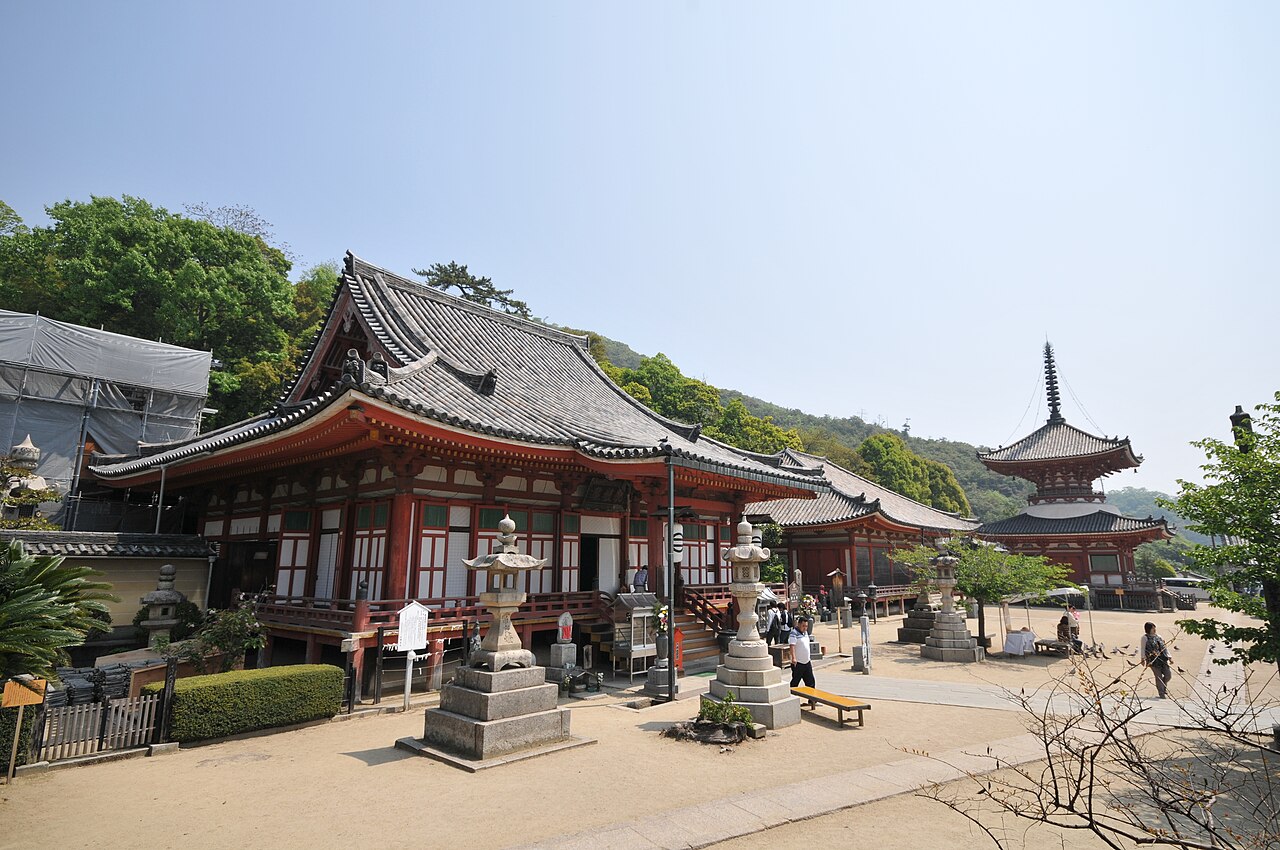

An Onomichi temple walk can be a walking experience in its own right, rather than a connection to a ropeway ride. Start from the station side of town, choose a manageable section of the hillside route and leave time to return through the lower streets. Visit Shimanami's temple-walk guide describes a route connecting twenty-five temples over about three kilometres. That is a useful framework, not a requirement to enter every temple in one outing. Choose the amount of climbing and temple visiting that suits your group before you begin.
Choose a section rather than count all the temples
The first decision is how much of the hillside you want to walk. A short visit can focus on one cluster of temples and the views over the Onomichi Channel. A longer outing can follow more of the signed historic route, with breaks and individual temple visits. The distance shown for a mapped course is only one part of the effort: steps, gradients and time spent exploring change the day.
Choose a main temple or viewpoint as the anchor, then identify a sensible return to the lower town. Save a map that shows the pedestrian connections rather than only a road route. If you intend to visit Jodoji, examine where it sits in relation to the rest of your selected section. It is better to make it a deliberate destination than to add it when everyone is already tired.
Choose the option that fits your day
| Your situation | Useful choice | Check before committing |
|---|---|---|
| A short hillside experience | Choose one temple cluster and a return path | Count steps, breaks and the descent as well as distance |
| A longer temple route | Use the signed course and select the interiors you want | Allow for individual reception hours and time inside |
| Steps or rain make climbing unsuitable | Choose a lower-town alternative | Research the actual indoor stop or transport service |
Begin with the lower town and a clear uphill connection
Use the station area to organise the essentials before climbing: a smaller bag, water and the map you will follow. Pick an identifiable junction for the start of the uphill section. Onomichi's lanes and steps create much of its character, but they also make a vague instruction to head toward the hill less useful than a route with named landmarks.
Keep the railway and hillside relationships in mind as you move from the lower streets. Use designated crossings and public paths. A shortcut visible in a photograph may be a private approach or a staircase that leads somewhere different from your destination. If you miss the connection, return to a clear junction and check the map rather than continuing higher simply because the view is attractive.
Let individual temples set the pace
The temple-walk overview introduces Jikoji and its clay Buddha-related tradition as one of the area's distinctive experiences. Other temples offer different architecture, gardens or viewpoints. Decide what you want to enter and what you are content to appreciate from the public route. Opening and reception arrangements belong to the individual temple, so check a specific experience before treating it as a guaranteed stop.
Walk quietly near worship areas and follow the rules at each entrance. Put the camera away where photography is restricted and leave room for people using the temple normally. If a service or ceremony is taking place, adapt the visit rather than turning it into an obstacle to your itinerary. A small number of unhurried stops will usually give you more to remember than a complete list of gate photographs.
Dr Goofy shares a day-trip temple walk through Onomichi’s hillside setting. View original
Distinguish a walking route from a step-free route
This plan is for travellers who want to walk the hills. Check the actual staircase and gradient information if anyone needs to avoid steps. A route being popular with visitors is not enough to decide its suitability for a wheelchair, pushchair or a painful knee. Choose a lower-town alternative or a separately researched transport arrangement when the hill section does not fit the group.
Wear shoes suitable for the surface and reduce the route in wet conditions. Carry what you need for the section you have chosen without bringing an unnecessarily large case. When pausing on steps, move out of the way where there is room. For a group with different walking speeds, agree on the next temple or junction as the meeting point before separating.
Use views of the channel as pauses, not extra destinations
The relationship between the hill, the town and the channel is a central part of an Onomichi walk. Enjoy a view when the route naturally provides one instead of adding every saved photo spot. A pause gives you time to understand the town's layout and decide whether the next section still appeals to everyone.
Social posts can help you recognise the kind of scene you want: steps, rooftops, temple approaches or the water beyond. Choose among those interests rather than attempting to reproduce all of them. If the group has had enough climbing, take the planned return route and enjoy the lower streets. Ending the hill section at the right point is part of a good walking plan.
M. G. O’Brien looks over the Onomichi Channel during a temple walk, a view to enjoy as a pause along the route. View original
Make the descent and meal part of the route
Keep enough time and energy for the way down. Choose a return connection that you can identify on the map and avoid changing it casually at an unfamiliar staircase. If the group is tired, a known route can be easier than a more scenic detour. The lower town can then provide the meal or cafe break that completes the outing.
Find a specific food option with a nearby alternative and check its service hours. If you have a train afterward, include the walk to the station and any luggage collection before deciding how long to stay at the meal. A temple walk followed by a relaxed lower-town lunch is a complete experience; it does not need an additional cycling excursion or another hilltop visit to justify the day.
A flexible walking example
For example, a traveller chooses a short hillside temple cluster and saves the uphill junction and return path before leaving the station area. They spend longer at one temple than expected and enjoy a view over the channel. At the next junction they choose the planned descent rather than trying to complete the entire temple course. A meal in the lower town and an easy station return complete the visit. Another traveller with more time could extend the signed course without changing this basic decision process.
Ivy Aiwei introduces Onomichi’s slopes and historic town atmosphere. View original
Questions about walking Onomichi's temple route
Do I have to take the ropeway?
You can choose a walking-led hillside visit. Identify the pedestrian course and check that its steps and gradients suit you. A ropeway ride is a separate transport choice, not the definition of the temple walk.
Must I visit all twenty-five temples?
Use the full course as a framework. Choose a section and individual visits that fit your time, interests and walking ability. Allow for reception hours and the time spent inside.
Is the mapped distance enough to estimate the effort?
Include the climbing, steps, breaks and descent as well as horizontal distance. A shorter hillside section can take longer than a flat street walk of the same length.
What is a good bad-weather alternative?
Reduce the hill section or choose a lower-town visit when the steps are uncomfortable. Research the particular indoor stop and meal you want, then keep the station connection straightforward.
Japan Destinations focuses on stone steps and exploring Onomichi on foot. View original
Travel videos from All Japan
Popular YouTube posts
 Japan’s Genius Ways to Beat the Brutal Summer Heat!KuroseShortsYouTube · 4,251,845 views
 Nara🇯🇵 Discover the Magical City Where Deer and Temples Coexist | 4KDuckTravel走鴨旅行YouTube · 3,262,121 views
 a weekend in onomichi | a seaside ghibli town with 25 temples, cats and cafesSam and VictorYouTube · 1,554,513 views
 Nikko🇯🇵 Japan's Sacred Mountain World of Golden Shrines and Giant Cedars | 4KDuckTravel走鴨旅行YouTube · 812,249 views
 【4K Japan Walk】Beautiful Autumn Kyoto | Walk around 8 popular spots for autumn leavesScenery of JapanYouTube · 244,406 views
 Rainy Forest Walk at Daisen Temple | Tottori, Japan 4KAmbient ExplorationYouTube · 130,225 views