
Shiraito and Otodome Falls: Plan the Bus Stops and Two-Waterfall Walk
On this page
- Make sure you have the Fujinomiya waterfall
- Choose the option that fits your day
- Choose the bus service before the walking route
- Walk between the waterfalls as one visitor area
- Photograph the curtain without chasing a fixed picture
- Add food or another Fuji sight with a clear priority
- Adapt the visit to the weather and your group
- A first visit that keeps the day simple
- Questions to settle before departure
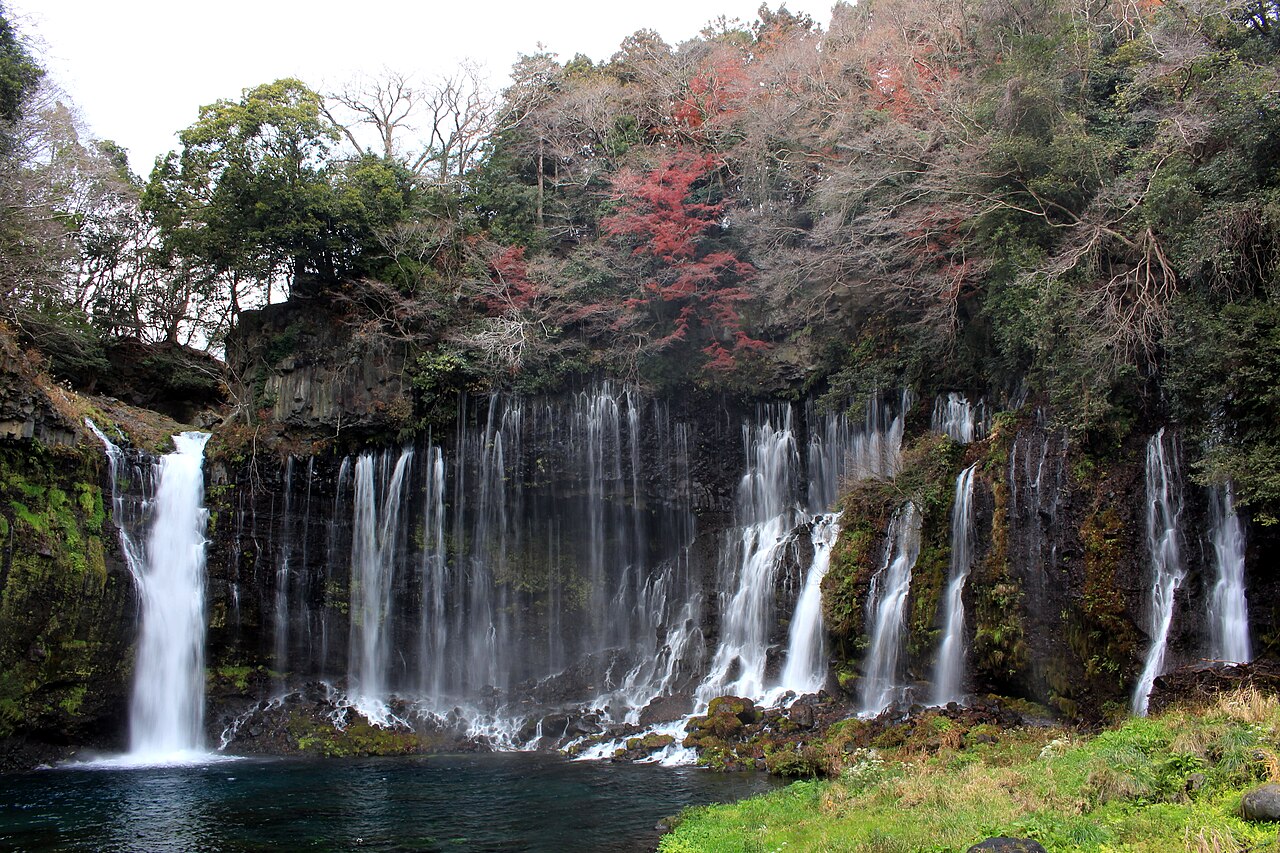
For Shiraito Falls in Fujinomiya, choose the correct bus stop, walk the two-waterfall area at a comfortable pace, and protect the return journey before adding another Mount Fuji sight. Shiraito's broad curtain of spring water and nearby Otodome's concentrated river cascade make a rewarding pair. The useful planning question is how the walking route and bus service fit together, especially if you are arriving without a car.
Make sure you have the Fujinomiya waterfall
Several places in Japan share the name Shiraito Falls. This guide concerns the waterfall in Fujinomiya, Shizuoka Prefecture, on Mount Fuji's southwestern side. Save the Japanese name, 白糸ノ滝, together with Fujinomiya and your actual arrival stop. A search result for another Shiraito can lead to a very different region and transport plan.
The city describes a wide cascade supplied largely by water that has travelled through the volcanic landscape from Mount Fuji. That gives the waterfall a different character from a single river plunging over one edge. Instead of looking only for a central stream, notice the individual strands, the rock face behind them and the way the curtain extends across your field of view.
Otodome is nearby, but it is a separate waterfall. The city identifies it with the Shiba River's main flow, contrasting its concentrated movement with Shiraito's many strands. Give both names space in your plan rather than assuming one is an alternative spelling. Seeing the two in the same outing helps explain why the wider visitor area is more interesting than a single quick stop.
Choose the option that fits your day
| Your situation | Useful choice | Check before committing |
|---|---|---|
| Using a Fujinomiya bus | Match the named stop to the service | Include the walk from the road |
| Avoiding stairs | Ask about the accessible observation deck | Do not assume every lower path is step-free |
| Continuing around Mount Fuji | Save the onward service and final return | Keep the next attraction optional |
Choose the bus service before the walking route
The Mount Fuji West Side Story transport guide distinguishes the route linking Shin-Fuji, Fujinomiya and the Fuji Five Lakes from the route toward Kyukamura Fuji. It also names different nearby stops. For the Shin-Fuji–Fujinomiya–Kawaguchiko–Mt. Fuji Station through route, the guide names Shiraito-no-Taki Waterfall Ent. For the Fujinomiya–Kyukamura Fuji route, it names Shiraito-no-taki kankouannnaijyo, the tourist information centre stop. Use the name listed for your departure and check its map position before boarding. The practical lesson is to match the stop to your actual service, not to assume every bus displaying a familiar destination uses the same stopping place.
From Fujinomiya Station, check the departure you intend to use and its return counterpart. If travelling across the region from the Fuji Five Lakes, establish whether the service takes you back to your accommodation or onward toward a different railway connection. A geographically appealing through journey can still be inconvenient if the useful bus departures do not match the time you want at the falls.
Save the stop names in Japanese and English, the route direction and a current timetable screenshot. Include the walk between the stop and the waterfall area. The tourism transport page distinguishes the walking distances for its named stops; the point is that getting off the bus does not place you at the basin. Leave enough time to orient yourself, read the signs and walk back without rushing.
For the return, choose an earlier useful departure rather than building the entire day around the final possible bus. Keep a later option where the published timetable offers one. If the gap between services is long, decide in advance whether you want a shorter waterfall visit or a leisurely circuit with a meal. Both can work when the transport plan is deliberate.
Khanadians includes Shiraito Falls in a Mount Fuji region trip and discusses the mountain being obscured by clouds. View original
Walk between the waterfalls as one visitor area
On arrival, use the local map to understand the relationship between the shops, Otodome viewpoint and the route down toward Shiraito. The two waterfalls are close enough to form one outing, but paths, stairs and viewing areas still take time. Start by locating the return route, then follow the signed visitor paths rather than a shortcut suggested by a distant map pin.
At Otodome, take in the concentrated flow before moving on. Its visual rhythm is different from Shiraito's, so a brief pause helps avoid treating it as a box to tick. Continue toward Shiraito with your camera put away on steps. When you reach a comfortable stopping place, look at the full curve of the landscape before concentrating on a smaller section of water.
Choose your turnaround point according to the group's footing and energy. A descent that feels easy on arrival also has a return climb. If your party includes someone who prefers fewer steps, discuss that before heading down. The transport tourism guide notes a wheelchair-accessible observation deck, so ask which lower paths and viewpoints suit your mobility needs.
Ask for the exact accessible route if you need it, including where to enter and whether the chosen bus stop connects conveniently with that route. Different questions produce different answers: access to an upper view, access to the base, and access from a parking lot are separate matters. Let the most comfortable available viewpoint become the shared centre of the visit.
Photograph the curtain without chasing a fixed picture
Shiraito rewards looking across the scene rather than immediately zooming in. Start with the width of the cascade and the vegetation surrounding it, then isolate an interesting group of streams. Changes in light can make the water, rock and leaves stand out in different ways. You can make a satisfying photograph without a clear mountain view in the same frame.
Mount Fuji itself is weather-dependent. A social post that includes the mountain and a waterfall does not promise both will appear together on your day. Give the falls their own purpose in your itinerary. If the mountain is visible from an appropriate viewpoint, enjoy that additional perspective; if it is clouded over, the spring-water landscape still offers plenty to observe.
At busy viewing places, make one broad image, one closer detail and a quick group photograph, then move aside. That simple sequence leaves room for others and prevents the camera from consuming the entire visit. A small cloth helps with moisture on the lens, while a secure bag keeps your hands free on the stairs. Keep equipment within the space allowed by the posted visitor rules.
Fujinomiya City introduces Shiraito in its official destination film. View original
Add food or another Fuji sight with a clear priority
A meal can give the outing an easy rhythm, especially when your return bus leaves a useful gap after the waterfall circuit. Check what is open when you arrive and decide whether you want a full meal or a lighter stop. If the bus is the fixed part of the day, leave room to order, eat, pay and walk back to the actual stop.
Fujinomiya offers a wider Mount Fuji setting, including Fujisan Hongu Sengen Taisha and the World Heritage Centre. These are possible additions to a city-based day, but choose the transport connection before promising yourself all of them. A bus route on a regional map describes geographic links, while your timetable determines which combination is comfortable on the date you travel.
If you are continuing toward Lake Tanuki or the Asagiri area, treat that as a second transport decision. Establish the exact stop, the onward service and the final return before leaving the waterfall area. When only a narrow connection remains, shorten the optional stop rather than the essential walk back. An itinerary with one satisfying waterfall circuit often feels fuller than several hurried arrivals.
Uncledoctorvacation identifies a Fujinomiya Shiraito Falls visit in this 2024 video. View original
Adapt the visit to the weather and your group
A waterfall visit remains an outdoor outing even when the main approach has visitor facilities. Look at the day's forecast and the current local notices before departing. Rain can affect the comfort of steps and paths, while an umbrella can be awkward in a crowded narrow space. Bring the clothing and footwear that allow you to walk with both confidence and consideration for others.
For families, explain the sequence before starting: arrival stop, waterfall area, a rest, then the return bus. Agree on a meeting point if anyone pauses for photographs. Carry what you need for the walking portion rather than expecting to leave belongings safely at an unverified facility. The easiest family plan is one in which the final climb and return walk remain within everyone's energy.
Drivers should save the actual car park and include its walking route in the visit. The municipal address or a broad attraction pin may refer to a larger area rather than the place where you will leave the car. Check the parking information for your date and vehicle type, and remember that parking and waterfall access are separate practical questions.
A first visit that keeps the day simple
Begin with the bus you can genuinely catch, followed by the signed approach to the two-waterfall area. Orient yourself before entering the scenic section and check the return departure. Visit Otodome and Shiraito in the sequence the open paths make convenient. Let the shared comfortable viewpoint determine how long you stay rather than copying someone else's exact photography routine.
After the main view, decide whether a meal fits the remaining window. If it does, enjoy the pause; if it does not, return to Fujinomiya for the next part of the day. Save the more ambitious Mount Fuji circuit for a schedule that supports it. The rewarding part here is the contrast between two nearby water landscapes, with enough time to notice their different forms.
TokyoStreetView presents the spring-water landscape in a 2017 film; its publication date is separate from current transport information. View original
Questions to settle before departure
Is this the Shiraito Falls near Karuizawa?
No. This article concerns Fujinomiya in Shizuoka. Include the city name whenever you search for transport or save a map location. The shared name is an easy source of confusion when planning several regions in one Japan trip.
Can I reach the falls by bus?
The regional tourism transport guide lists services through Fujinomiya and the Mount Fuji west-side area, with different named nearby stops. Use the current service timetable and include the walk from your chosen stop. Plan the return at the same time as the outward journey.
Do I need to see Mount Fuji for the visit to work?
No. The spring-water curtain and nearby Otodome provide the main experience. A clear mountain view is an additional possibility, not the basis for whether the outing succeeds. Choose one comfortable circuit and enough time to enjoy it.
 誰も行かないガチ秘境"静岡最北部"を全力で観光してみた!!
