
Hama-rikyu from Shiodome: Plan the Pond, Tea Stop and City Exit
On this page

For a comfortable Hama-rikyu visit, choose a land entrance from the Shiodome or Shimbashi side, make the tidal pond your main landscape interest and decide whether a tea stop belongs in the plan. Add a boat journey only after checking the operator's actual route and sailing information. The garden is a substantial outdoor visit, not simply a shortcut between a city station and the waterfront.
Choose the kind of contrast you want
Hama-rikyu combines an Edo-period garden setting with the modern city around it. The pond and the skyline create a striking contrast, but you do not need to spend the entire visit searching for one ideal photograph. Decide whether you mainly want the water landscape, the garden's history or a seated cultural pause. That gives the circuit direction while leaving room to enjoy views you did not know to look for before arrival.
The operator describes the garden's tidal pond and its relationship with seawater from the bay. That is a useful starting point for observing the landscape. Notice the banks, bridges and changes of view rather than expecting the water to behave like a dramatic tide demonstration at a fixed hour. The garden's history also includes former residences and hunting grounds, so a path or earthwork may have a story beyond its immediate appearance.
Choose the option that fits your day
| Your situation | Useful choice | Check before committing |
|---|---|---|
| Pond and cityscape views | Choose a land entrance and varied pond-side pauses | Save the actual gate from the useful station |
| Matcha is a must | Check the named teahouse service | Allow for its queue within the garden window |
| A boat connection is appealing | Read the actual operator and sailing information | Retain a clear land return for a fixed appointment |
Pick the station for the whole day
Official access information gives walking approaches from Shiodome, Tsukiji-shijo and Shimbashi. Compare them with the place you are leaving and the destination after the garden. The shortest final walk does not automatically create the easiest overall journey if it adds an awkward transfer. Save the actual entrance rather than a destination pin on the central pond, and identify the street-level connection from your chosen station exit.
If you plan to visit the Tsukiji area as well, keep the food stop and garden as separate activities. A nearby district can still involve a meaningful walk, and a queue can change how much daylight remains. Decide whether the meal is essential or flexible before choosing the order. A garden-first plan protects the landscape window; a food-first plan may suit an important reservation, but should leave enough time for the circuit to be more than an afterthought.
For anyone carrying luggage, arrange storage somewhere that fits the onward route. A large garden is not made easier by a heavy case simply because it lies in central Tokyo. Include collection in the final schedule. For a mixed-energy group, make the approach as straightforward as possible so that the main effort goes into the garden rather than finding a difficult exit or walking an unnecessary extra section before admission.
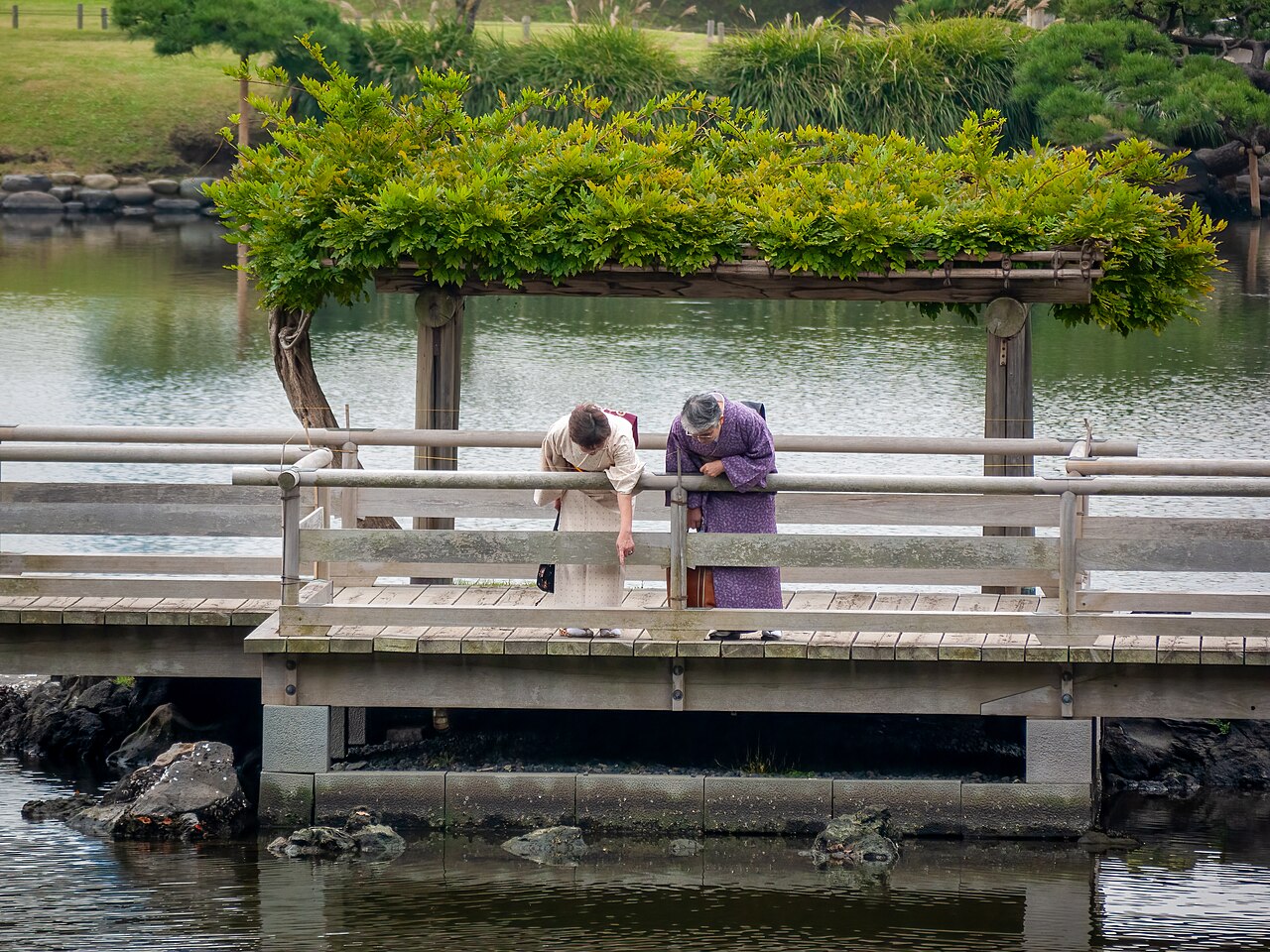
Omerta Table 5 discusses the teahouses and tidal-pond setting at Hama-rikyu. View original
Give ordinary opening hours a real visit window
The operator's English information lists 9:00 to 17:00 opening, entry until 16:30, adult admission of ¥300 and a year-end closure from December 29 to January 1. Read current notices before travelling, especially for a holiday or a specific programme. Last entry is a boundary for admission, not a recommendation for how late to begin a relaxed walk through a sizeable garden. Give the circuit and your pause room before closing.
Think of the visit as a sequence: arrival, orientation, a landscape circuit, an optional service and departure. Each part draws on the same time available. If you have a booked evening activity, set the time to leave the garden before deciding how long to spend at a cafe. That simple ending lets you enjoy the earlier walk without repeatedly recalculating whether another bridge or viewpoint is still possible.
In warm weather, water, shade and a manageable route are more useful than an ambitious list of distant corners. In wet weather, assess surfaces and choose the more comfortable path. A broad overview photograph cannot tell you whether a particular route suits someone with a mobility aid, so use the current map and ask about the specific section. Keep the scenic goal separate from assumptions about the effort required to reach it.
Use the pond as the anchor
At the entrance, identify the pond-side route and the places that connect with your chosen exit. Follow the visitor paths to see the water and buildings from several positions. A bridge or teahouse that dominates one view may become a small element in the next. This is a better reason to move around the garden than trying to reproduce every frame of a social-media reel. Let each pause show you a different relationship.
Leave room to look beyond the skyline photograph. Trees, banks and the water's edge give the garden its own scale even when high-rise buildings remain visible. You can choose a few memorable compositions rather than constantly searching for the cleanest possible background. If a popular viewpoint is busy, continue to another point and return only if it fits the circuit. Waiting for an empty frame should be a choice, not an invisible obligation.
Respect path and bridge circulation when taking pictures. Avoid stopping a group in a narrow passage, and follow the current rules around buildings. For children or anyone who prefers fewer steps, agree on the shared route before separating for photographs. A clear meeting place and a shorter option can make the outing more enjoyable for everyone than assuming the whole group wants the same long loop.
Acres Wild introduces the contrast between Hama-rikyu’s historic garden landscape and Tokyo’s modern skyline. View original
Treat tea as a service to check
The waterside teahouse is a recognisable part of Hama-rikyu, but its current service window and queue deserve a separate check. If matcha is your main interest, check the facility's current arrangements and give it a defined place in the route. If it is simply a pleasant option, decide when you reach it and keep the rest of the circuit flexible. A seated pause should support the visit rather than consume the last useful time unexpectedly.
Do not equate every historic teahouse building with a cafe. Some structures are chiefly part of the garden's interpretation or architecture. Check the named facility for the experience you want. This distinction is especially useful when reading a social caption that moves quickly between building history, drinks and a broad garden view. The visitor can enjoy all three themes while still planning the practical service separately.
Flowers are another optional priority. A post about cosmos or seasonal planting belongs to its month and year. Read current flowering information if the field is the reason for coming, and keep the pond-and-landscape circuit as a worthwhile base. The garden should not become a disappointment merely because a patch of colour differs from a photograph made in another season.
Rhiannon’s cosmos post records a September 2024 scene, separate from current flowering conditions. View original
Make a boat connection a confirmed addition
The garden's access material mentions water transport, but a workable boat journey requires the current operator's route, timetable, boarding conditions and landing arrangements. Do not assume a convenient return sailing because a map shows a pier. Decide whether the boat is the main experience or an optional way to continue. For a fixed appointment afterward, retain a clear land-based route unless the sailing has been checked and fits comfortably.
If you leave on foot, choose the station for the next destination before the final garden section. This avoids crossing more of the grounds than you intended simply because you started following another visitor toward a different exit. For a city day, one clear continuation is enough: a meal, a waterfront activity or a station return. The garden can be substantial without being the first item in an ever-expanding list.
TOKYO Challi & Walk describes a Shimbashi approach and an extended garden walk in a November 2026 video. View original
Questions that matter
Can I rely on a boat to leave the garden?
Only after checking the actual operator's current service and boarding arrangements. A pier on a map is not a timetable. Keep a land route understandable, particularly when you have a fixed dinner, train or other appointment later in the day.
Which station is best?
Compare Shiodome, Tsukiji-shijo and Shimbashi with your full itinerary. Save the correct entrance and station exit, not merely the shortest line on a map. The easiest combination depends on your previous and next stops as well as the garden approach.
Should I visit for the flowers alone?
Use current information for a flower-led trip and recognise the date of every reference image. For a more flexible visit, make the pond, bridges and garden composition the main interest, with seasonal planting as an additional pleasure rather than the only reason to come.
Travel videos from All Japan
Popular YouTube posts
 6 days in tokyo (cat temple, new shibuya mall, tokyo tower hotel)Sam and VictorYouTube · 587,787 views
 Stop Paying for Subways: Tokyo Station’s 100% Free Bus (2026 Guide)ONE GOOD DREAMYouTube · 398,459 views
 Hidden Tokyo | The Quiet Side of Shinjuku & Toshima City | JAPAN vlogRiri TravelsYouTube · 343,132 views
 Enjoying Kyoto Historic Streets | Gion Geisha District | Zen Temple, Cafes & Long-Established ShopsLocal Japan TravelersYouTube · 124,235 views