
Okayama Korakuen and the Castle: Choose Your Gate Before You Walk
On this page
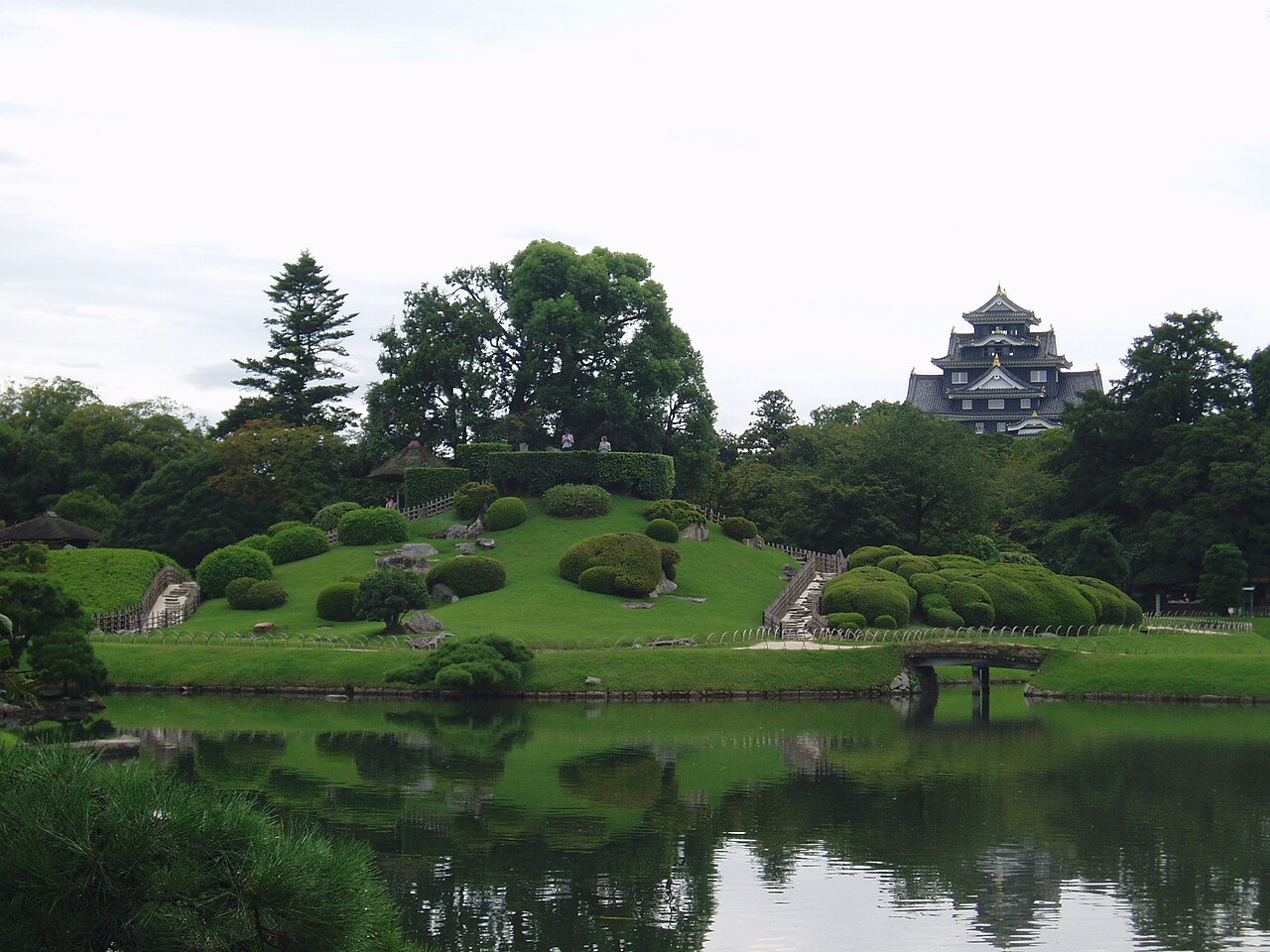

Visit Okayama Korakuen with a plan for both sides of the river: enter from the station side for a garden-first outing, or connect the South Gate with Okayama Castle when the castle is your other priority. The useful decision is where to finish, especially when bags and a departing train are waiting at Okayama Station. This route focuses on that practical garden-and-castle pairing rather than a list of everything to see in the city.
Start with your two priorities
Korakuen rewards a wandering circuit, while a castle visit introduces an indoor attraction with its own ticket and operating window. Decide whether you want both interiors and garden, or simply the castle as scenery across the water. A photograph of the castle from outside does not require the same allocation as exploring its exhibits. Giving that choice a name before arrival keeps the day from becoming an argument between a railway deadline and another interesting room.
The garden's appeal includes open lawns, ponds and changing perspectives. You do not need to know every planting name to enjoy the arrangement. Pick a broad view, then follow the paths to see how a building, hill or water surface changes its place in the composition. Keep a small amount of unallocated time for the view you happen to like most, instead of treating every point on the map as a required stop.
Choose the option that fits your day
| Your situation | Useful choice | Check before committing |
|---|---|---|
| Garden is the priority | Main Gate approach and an unhurried garden circuit | Add the castle interior only within its useful window |
| Castle interior is essential | Give its visit a protected place in the day | Connect the South Gate and Tsukimi Bridge deliberately |
| A booked train ends the outing | Choose the garden exit for the return route | Include the station walk, bags and platform |
Choose the approach from Okayama Station
The garden's official access page gives walking, bus and streetcar options. Its station-to-garden walk is about 25 minutes. The bus approach serves Korakuen-mae, while the streetcar approach uses Shiroshita and continues on foot. Compare the whole trip rather than only the minutes spent aboard a vehicle: reaching the stop, waiting and finding the garden gate all belong to the journey. With a heavy case, store it before deciding that a scenic walk is the easiest option.
For the Main Gate approach, identify Tsurumi Bridge. For a castle pairing, identify Tsukimi Bridge and the South Gate. These are different river crossings with different roles in the outing. Save the gate as the destination on your map rather than dropping a pin in the middle of the garden. If your group splits for lunch or photographs, choose a meeting place outside the admission boundary so nobody has to negotiate an unexpected re-entry arrangement.
Do not automatically make the outward and return journeys identical. A bus arrival followed by a castle-side finish can make sense, as can a station-side walk out after the garden. The best combination depends on the activity that comes next. Check the current public-transport information linked by the operator when you settle the plan; use the operator’s timetable and stop information to choose the departure that serves your route.
The official garden account introduces late-summer scenery and the need to stay hydrated. View original
Walk the garden before adding more stops
At the entrance, use the garden map to connect an open lawn view, a pond-side stretch and one quieter corner. This produces a satisfying circuit without needing a rigid turn-by-turn prescription. Follow current path signs and any temporary restrictions. Paths that look connected in an aerial photograph may not form a visitor route, and cultural-property grounds are not a place to improvise a shortcut across a planted area just to reproduce a social photograph.
The open landscape is also a reason to think about conditions. In warm weather, carry water and let a shaded pause determine the next section of the circuit. In rain, choose footing and comfort over completing every loop. For someone who prefers fewer steps, look at the entrance map together and agree on a shorter return point before the group spreads out. That is more useful than assuming every path is suitable because the garden appears level in pictures.
The official tourism guide describes seasonal flowers and special evening openings. Treat a night event as a separate dated programme, not as a feature available after every ordinary visit. A winter scene, summer lighting installation or flower close-up can help you choose an interest; it cannot tell you the conditions on your particular morning. The garden's current notices are the right place to resolve that question before buying a ticket for the experience you have in mind.
Put the castle on the correct side of the schedule
For a garden-led day, enjoy Korakuen first and decide whether the castle interior still fits once you reach the castle-side connection. If the exhibition is the reason you came to Okayama, reverse the emphasis and protect enough time for it before the garden. Neither order is universally superior. The important point is to avoid leaving a must-see indoor attraction until after a long, unhurried garden circuit has already used the useful admission window.
A combined ticket, where offered, should be read for the named attractions and conditions. Do not infer that every nearby museum, special exhibition or evening event is included. A ticket is a financial choice, while a workable route is a time-and-energy choice. You may reasonably decide that a garden-only visit and castle exterior are better than purchasing more activities simply because they appear in a package. Compare the actual options at the official ticket information before committing.
The river connection is part of the visit rather than an invisible transfer. Include time to stop for a view, cross with the group and find the next entrance. If someone needs a seated pause, take it before the next paid interior rather than buying admission while already tired. Keep enough flexibility to finish with a good view and a comfortable departure instead of racing through the last attraction just to claim that both were completed.
Korakuen staff document seasonal pine maintenance, a different context from a flower-viewing photograph. View original
Food, bags and the final train
Put a meal into the part of the route where it naturally belongs. If lunch is near the station, it can happen before the garden or after the return; if you choose somewhere around the castle district, make the food stop part of that side of the river. Allow a queue to replace an optional stop, not the time needed to get back for a booked train. A small snack is useful, but it should not become the plan's only provision for a long city outing.
The station deadline includes collecting luggage, finding the platform and getting aboard the service you actually need. Work backward from that point to the time to leave the garden-and-castle area. Save one later connection as a contingency if your ticket permits it, while planning to use the intended departure. If you are staying locally, the same logic applies to the hotel check-in or a reserved dinner: the garden can remain leisurely because the ending has already been decided.
Read these posts as different perspectives
The official Korakuen account supplies seasonal context and visitor guidance, while the walking video connects the garden with the castle and surrounding city. Their dates matter. A post about summer heat supports packing water; an autumn maintenance scene helps explain the changing appearance of the pines. Neither should be converted into a claim that the same flowers, weather or work will be present for every visit.
The official account explains visitor conduct at the cultural-property garden. View original
Footsteps in Japan connects Korakuen with Okayama Castle and the surrounding city in a February 2026 walking video. View original
Questions before you go
Can I walk from Okayama Station?
Yes. The operator describes an approximately 25-minute approach. That is an access estimate rather than your complete outing. Add station navigation and any pauses, and consider how the return feels after walking inside both attractions. A tram or bus can be a useful alternative for one direction even if you enjoy walking in the other.
Which gate works for the castle?
The South Gate and Tsukimi Bridge are the useful landmarks to investigate for that pairing. Read the current visitor map and keep the castle entrance distinct from the garden gate. The Main Gate and Tsurumi Bridge serve a different approach. Saving both gate names makes a last-minute route adjustment much easier.
Should I stay for evening illumination?
Only build the day around it when a current official event notice matches your date. Ordinary opening hours and special evening programmes are separate planning inputs. If no suitable event is running, a normal daylight garden visit followed by the castle district remains a complete and worthwhile plan.
Travel videos from All Japan
Popular YouTube posts
 Okayama & Kurashiki🇯🇵 Explore Japan's Castle City and Dreamlike Canal Town | 4KDuckTravel走鴨旅行YouTube · 427,312 views
 江戸時代の風情残る街、倉敷へ。1泊2日で巡る岡山|備中高梁の夏祭りMaibaru TravelYouTube · 382,994 views
 2 Days in OKAYAMA & KURASHIKI 🍑 Discover Japan’s Beautiful Canal Town, Japanese Garden, Crow CastleMei TimeYouTube · 378,553 views
 『子どもたちと宮古島へ。真夏の離島旅🏝️| Shuka Fujii Vlog#011藤井 萩花 / SHUKA FUJIIYouTube · 334,833 views
 This happens only in japanese garden Korakuen okayama Castle INDIAN IN JAPAN II Rom Rom JiRom Rom JiYouTube · 226,421 views
 岡山|桃太郎大道處處是驚喜、晝夜後樂園&岡山城、能看城吃飯的茶屋、商店街裡的日式料理老店、巧遇西川綠道燈飾、一日散步|日本旅遊、日本旅行、Satori日本生活Satori日本生活YouTube · 134,609 views
 เที่ยว Okayama Kagawa ครบทุกแบบที่อยากได้! Ritsurin Garden SUGOI JAPAN Ep124WabisabiTVYouTube · 126,164 views
 【2025岡山自由行】必買必逛推薦✨市區購物好去處車站徒步3分|岡山後樂園、岡山城、岡山高島屋、岡山必吃、岡山交通|岡山自由行・日本旅遊 Japan 4Kvlog吉田社長 Japan TVYouTube · 119,461 views