
Kyoto Railway Museum: Steam Trains, Simulators and a Clear Visit Plan
On this page
- Reach Umekoji without crossing Kyoto twice
- Decide what needs advance planning
- Choose the option that fits your day
- Start with the trains, then follow the machinery
- Give the roundhouse and steam area their own time
- Read construction notices before following old videos
- A family route that does not depend on doing everything
- End toward the station you actually need
- Two workable ways to divide your museum time
- What to save before leaving your accommodation
- Questions that change the Kyoto plan
- Keep the station-to-museum transition simple
Make the steam locomotive area and one chosen activity the anchors of your Kyoto Railway Museum visit. Arriving with a short list is more rewarding than racing between every train, simulator and model railway. The museum works especially well for visitors who want to understand the trains they have been riding around Japan, and for families who need an engaging change from temple visits.
Reach Umekoji without crossing Kyoto twice
The museum is in the Umekoji area, with JR Umekoji-Kyotonishi Station providing a nearby rail approach. From Kyoto Station, compare that connection with walking through the surrounding district. The better option depends on your luggage, weather and starting point. A short train journey still includes the walk to the platform and from the destination station; compare complete routes rather than vehicle time alone.
Put the museum before an optional city stop, not between two tightly timed temple reservations. Its attraction is the opportunity to linger around full-size rolling stock and demonstrations. If you have just arrived by Shinkansen, leave large bags at a suitable storage point before entering. Save the location of that storage separately from the museum so that the return does not accidentally skip your luggage.
Decide what needs advance planning
The official English website distinguishes general admission from driving simulator tickets and states that advance ticket purchase is required to operate a simulator. Treat that as a separate planning decision. Having an admission ticket does not mean a particular simulator session is included or available at the moment you walk past it.
Choose one preferred activity and one fallback. A simulator may be the main attraction for one visitor, while another would rather spend the same time around the roundhouse. For a mixed group, make the shared rolling-stock circuit the common experience and let the optional activity occupy only part of the visit. That avoids making the whole day depend on a scarce slot.
Choose the option that fits your day
| Your situation | Useful choice | Check before committing |
|---|---|---|
| Admission and activities | General entry | Today’s steam programme |
| Current site route | Read Nijo Station notice | Use available facilities |
| Return to Kyoto | Finish a favourite train | Reach the right platform |
Start with the trains, then follow the machinery
The main halls give you the scale of the vehicles before you examine individual details. Look at the relationship between the train body, wheels and platform level. After that broad first impression, choose a few objects to inspect closely: a cab layout, a passenger interior where access is permitted, and the equipment beneath a carriage.
This sequence is particularly useful with children. Asking how a train stops, turns or receives power gives them a concrete question to carry between displays. Adults can use the same approach to connect a museum object with a familiar station experience. You do not need to recognise every train series to enjoy the collection.
A family visit describing collection highlights and separate activity planning. View original
Give the roundhouse and steam area their own time
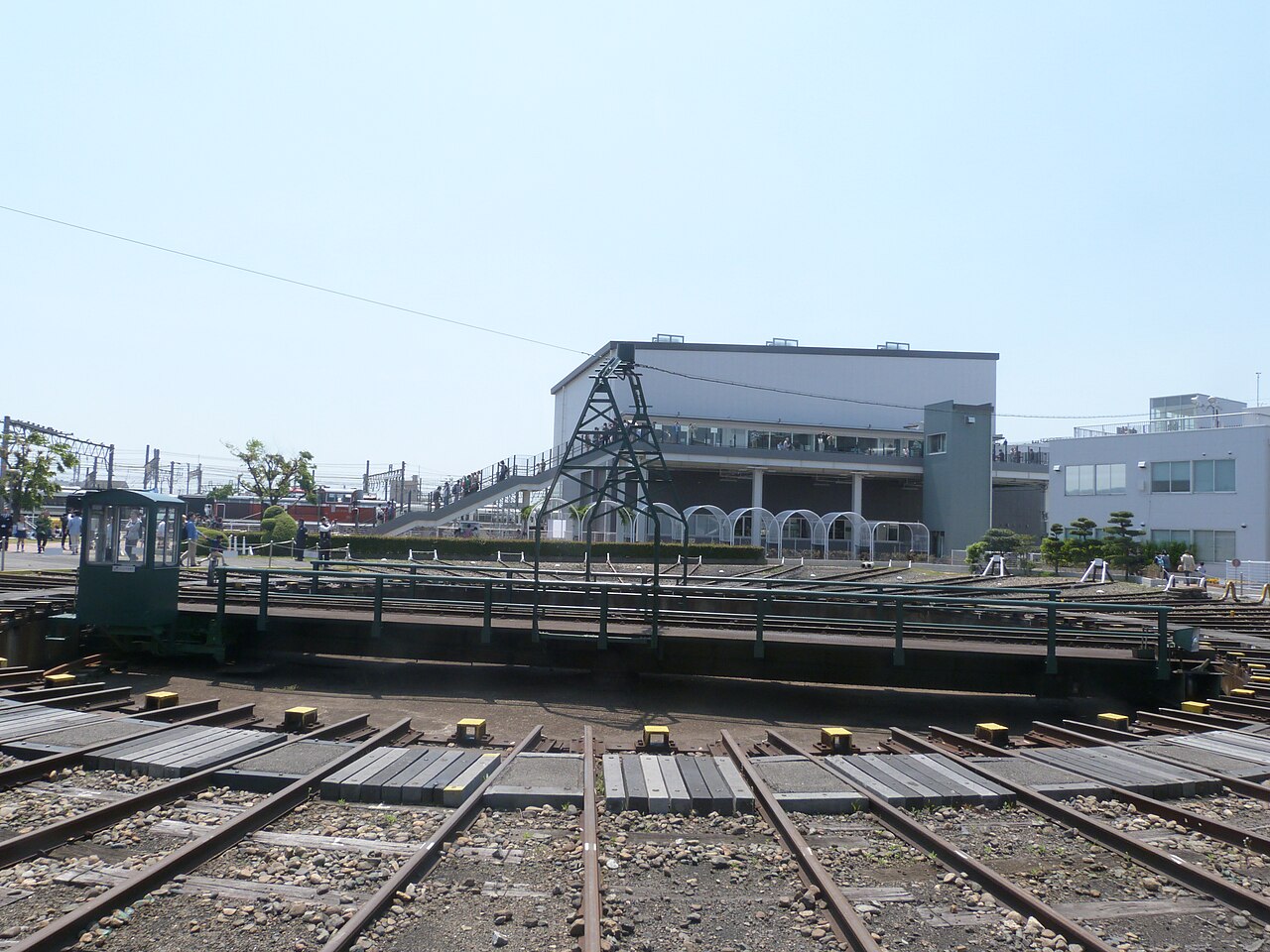
The steam locomotive setting has a different atmosphere from an indoor gallery. Read the day's operating information before deciding when to visit it. A photograph of a working locomotive is not a promise that the same locomotive or demonstration will be running during your visit.
The SL Steam ride is a distinct experience from walking around preserved locomotives. Check its availability, ticket arrangements and departure information on the day. If a ride matters to your group, build the indoor circuit around it. If it does not, enjoy the engineering and architecture of the steam area without turning the visit into a queueing exercise.
The museum’s own introduction to visitor highlights. View original
Read construction notices before following old videos
The museum's Japanese notices report changes affecting the former Nijo Station building and the SL rest area. Do not plan an essential shop stop inside the old station building from an older photograph. Use the current notice and staff guidance for the actual route, available retail facilities and any narrowed approach near the SL boarding area.
This is a useful example of why a museum film and a visitor notice serve different purposes. The film helps you recognise the setting; the notice tells you how the site currently operates. Keep both in view when planning. If a named building is unavailable, redirect that time to an open collection area rather than assuming the whole museum is closed.
A family route that does not depend on doing everything
Begin with a shared overview, continue to the chosen scheduled activity, and put a seated break before the final collection area. Let the most interested person choose a small number of trains to revisit. This is more manageable than promising every participant every simulator, train interior and meal option.
The official visitor guidance asks people not to use tripods or selfie sticks, not to eat while walking, and to use designated places for food and drink. Those rules also help the visit flow. Take a picture from a place that leaves the aisle clear, then step aside to look at it. Keep children close around doorways and changes in floor level.
JR West’s official introduction to Kyoto Railway Museum. View original
End toward the station you actually need
Leave enough time for the museum exit, your luggage stop and the correct Kyoto Station platform. A hotel in another district may be easier to reach without returning to Kyoto Station at all. Save that route before the visit so that the final decision does not depend on a tired group studying a map outside the entrance.
A nearby park break can be the optional ending, while another major attraction should remain a separate decision. If the museum has absorbed the available time, a simple meal and an unhurried return are a successful day. The purpose is to enjoy railway history, not to create another complicated connection.
A longer filmed visit showing the railway setting. View original
Two workable ways to divide your museum time
For a first visit centred on the collection, use a simple sequence: orientation in the main hall, a closer look at selected vehicles, a pause, then the steam area when its current programme suits you. This order gives the indoor displays a clear purpose before you move into the more operational setting of the roundhouse. It also leaves room to change plans if an attraction is busy.
For a simulator-centred visit, reverse the planning process. Confirm the booked session first, find its location on the museum map, and select a collection circuit that ends nearby. Keep the time before the session light enough that a slow doorway queue or a longer-than-expected explanation does not become a problem. After the activity, choose the steam area or one remaining gallery according to the group’s energy.
These are suggested sequences, not official guided routes or promised durations. Their value is that each has one anchor and a clear point at which to simplify. If a child wants to stay longer beside a favourite locomotive, you can remove an optional stop without losing the purpose of the day.
What to save before leaving your accommodation
Keep the general admission confirmation, any separate simulator booking and a link to the museum’s current notices in the same place. Save the route from your actual starting point and the next destination after the museum. A screenshot of an old operating schedule is less useful than a live link you can check for changes.
Bring only the luggage you can manage comfortably through a busy museum. A compact bag leaves your hands available for tickets and helps you move around doorways. If you are taking photographs, a charged phone or small camera is easier to use within the museum’s no-tripod and no-selfie-stick guidance. Decide where the group will meet if someone pauses longer at a vehicle.
Give the train ride to the museum a role in the experience. Look at the platform signs and the vehicle you board, then compare those ordinary details with museum interpretation later. The link between a working railway and a preserved collection can be a particularly good introduction for a child visiting a railway museum for the first time.
Questions that change the Kyoto plan
Is this only worthwhile for serious railway enthusiasts?
No specialist knowledge is needed to ask how a train carries passengers, receives power or is controlled. Choose exhibits that answer those questions. An enthusiast may read more technical labels, while another visitor enjoys full-size vehicles and a demonstration. Agree on a common circuit before separating for individual interests.
Should the steam ride or a simulator come first?
Use the actual ticket and operating arrangements to decide. A confirmed session is the fixed point; a ride without a confirmed time remains flexible until you read the day’s information. Do not make two activities compete by assuming you can move instantly between them.
Can this replace all other Kyoto sightseeing that day?
It can be the main outing, especially for a rail-focused family. If you add something, choose one place that fits the route afterward. A temple reservation across the city imposes a different timetable and should be included only when the complete connection leaves a comfortable margin.
Keep the station-to-museum transition simple
Before boarding for Umekoji, check that any separate activity confirmation is reachable without searching through unrelated messages. Keep the current museum notice page available as a live link. If you are travelling with children, choose a simple meeting instruction for the entrance: everyone stays together until admission and orientation are finished.
Inside, use the first map stop to locate your fixed activity and a suitable rest area. Do this before the group becomes absorbed in the first row of trains. The few minutes spent establishing the route can prevent repeated crossings later. A family member who wants to photograph every vehicle should know when the rest of the group plans to pause.
At departure, check whether the return route goes directly to your next destination or via stored luggage. That choice is easy to forget after an absorbing visit. The day works best when the beginning and end are simple enough that the collection receives most of your attention.
 Riding Real Thomas the Tank Engine Train in Japan | Oigawa Railway
 Day Trip to UJI #kyoto to Enjoy Matcha 🍵 and Visit the Oldest Shrine ⛩️ in Japan | Trip
