
Toyota Commemorative Museum: Follow the Story from Looms to Cars
On this page
- Choose the right Toyota destination
- Let the textile section establish the questions
- Choose the option that fits your day
- Work around demonstrations without turning them into a race
- Move from a component to the whole automobile
- Distinguish a museum demonstration from a factory tour
- Make time for the building as well as the objects
- Keep the Nagoya ending straightforward
- Two routes through the same industrial story
- Make technical exhibits easier to understand
- Questions about the Toyota museum choice
- Give a demonstration your full attention
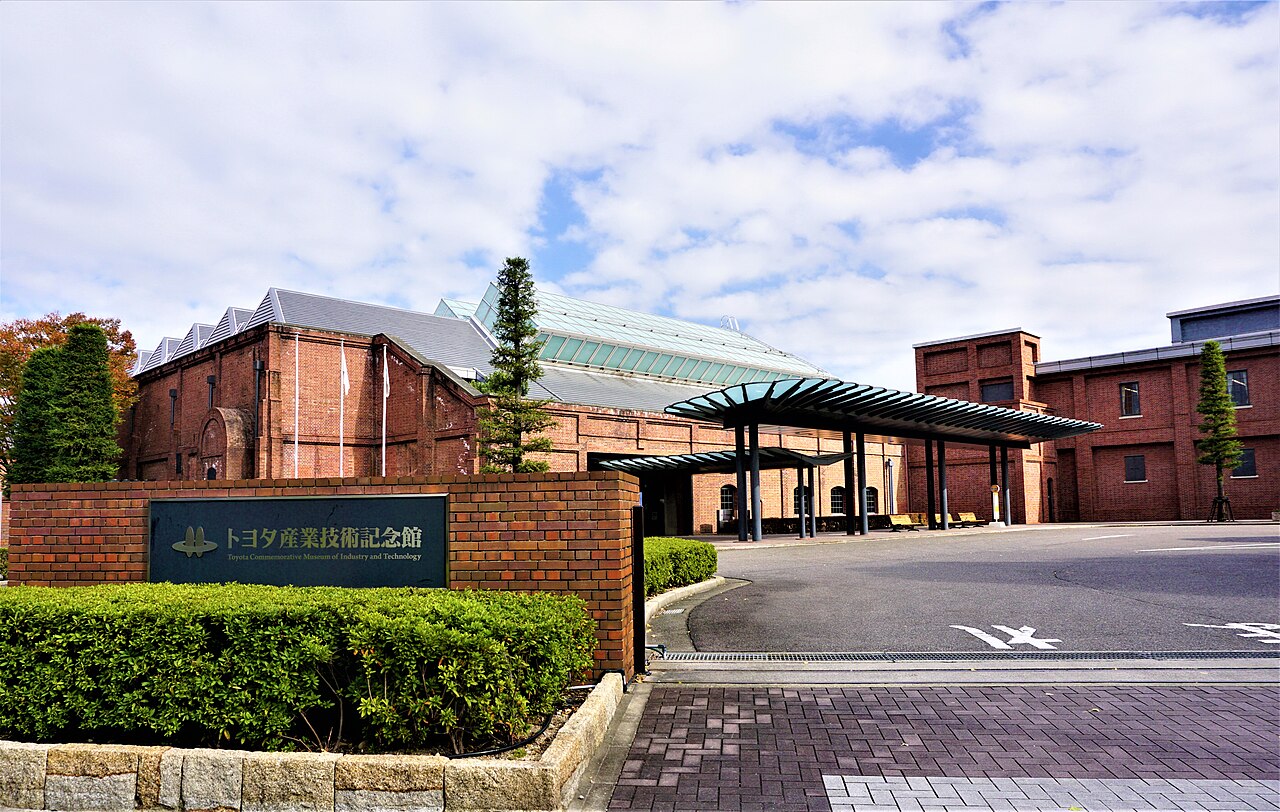
Begin with textile machinery, then move into automobile technology at the Toyota Commemorative Museum of Industry and Technology. This Nagoya museum is most rewarding when you follow the connection between making cloth, solving manufacturing problems and building vehicles. Arriving only for a row of cars misses much of what makes the collection distinctive.
Choose the right Toyota destination
The Toyota Commemorative Museum of Industry and Technology is a specific museum in Nagoya. It is different from the Toyota Automobile Museum in Nagakute and from Toyota facilities in Toyota City. Check the full name and address before opening a route planner, especially if someone in your group simply says they want to visit the Toyota museum.
The museum preserves an early factory setting associated with the Toyota Group. Plan a visit around its own access information, rather than attaching directions from a different Toyota site. A city-centre hotel may make a public-transport approach useful, but compare that journey with the current official access map and your actual starting location.
Let the textile section establish the questions
Start with the process: how does raw material become thread, and how does thread become cloth? Look for the sequence of operations rather than trying to understand every machine at once. A demonstration can make an unfamiliar mechanism much easier to read than a static label alone.
The official museum introduction emphasises actual machinery and dynamic demonstrations. Before leaving the first pavilion, identify one example of a repetitive task, one method of controlling quality and one way a machine reduces manual effort. These are useful ideas to carry into the automobile section, where the objects look different but manufacturing questions remain.
Choose the option that fits your day
| Your situation | Useful choice | Check before committing |
|---|---|---|
| Read the machine | Material input | Output and control |
| Connect the pavilions | Textile technology | Automobile technology |
| Choose the right Toyota visit | Commemorative Museum | Factory tour is separate |
Work around demonstrations without turning them into a race
Use the museum's current demonstration information to decide which session matters most. If two demonstrations are close together, choose the one that answers your main question rather than running through exhibits to collect both. The purpose is to understand a process while it is visible.
A group can pause before the machine starts and agree what to watch. One person might follow the movement of material; another might look at the operator's actions. Afterward, compare observations. This gives children and adults a shared activity without requiring either to absorb a long technical explanation.
A personal view of the automobile exhibits. View original
Move from a component to the whole automobile
In the automobile pavilion, work outward from a part or manufacturing operation toward the finished vehicle. Notice how many different processes sit behind something that appears seamless when parked on a street. Materials, precision and the order of assembly are part of the story, not just styling.
If cars are your main interest, reserve time here but keep the textile introduction. It makes the company's industrial origins intelligible and gives the museum a narrative. Visitors who are less interested in brands may still enjoy the engineering: a clear explanation of how something is made can be more engaging than a long list of model names.
A personal introduction to the Nagoya museum. View original
Distinguish a museum demonstration from a factory tour
A museum can show machinery operating without offering access to an active automobile factory. Do not treat the two experiences as interchangeable when booking the day. If your goal is a production-line tour, research that specific facility and its admission conditions separately.
For this visit, concentrate on the demonstrations, collections and interpretation available inside the museum. Ask what a process is trying to achieve and what can go wrong if its control fails. This keeps the visit interesting even when a particular machine is not running at the moment you pass it.
Make time for the building as well as the objects
The preserved industrial setting gives context to the collection. Pause at a point where you can see the relationship between the building's structure and the machinery it contains. That view helps connect individual exhibits with the larger environment in which manufacturing took place.
A good photographic sequence can be simple: one wide view of the setting, one machine detail and one image that shows a person interacting with an authorised display. Follow the museum's current photography instructions and keep aisles clear. You do not need dozens of near-identical car pictures to remember the visit.
Aichi Tourism Bureau presents the industrial museum. View original
Keep the Nagoya ending straightforward
After the museum, choose a meal or one nearby district according to the time and energy left. Moving immediately to a second large museum can flatten the experience into a sequence of halls. If you do want to compare Toyota museums, make that an intentional multi-visit project with separate transport planning.
Before leaving, name one connection between the textile and automobile pavilions that you had not noticed before. That small act makes the narrative stick. The museum's strongest takeaway is the relationship between observation, invention and making, which is relevant even to a visitor who has never owned a car.
A visitor guide introduces the exhibition experience. View original
Two routes through the same industrial story
A demonstration-led route starts with the current operating schedule. Pick one textile demonstration that explains a process you are curious about, then find the nearby interpretation before it begins. Afterward, carry that question into the automobile pavilion: how is material controlled, shaped, inspected or moved from one stage to the next?
A collection-led route begins with a slower overview of each pavilion. Choose a small set of machines or vehicle-related exhibits and compare them in detail. Add a demonstration when it fits rather than treating every operating session as compulsory. This suits visitors who prefer reading, photography or quiet observation over following a series of timed presentations.
Neither route requires visiting a second Toyota attraction on the same day. The relationship between the two pavilions is already a substantial theme. If you plan more than one industrial museum during your trip, record each full name and address separately so that you do not accidentally combine one facility’s access information with another’s collection.
Make technical exhibits easier to understand
Begin with the input and output of a machine. What arrives, what changes and what leaves? Once that sequence is clear, look for the moving part that creates the change. Only then move to the name of the mechanism or the explanation of its development. This is a practical way to approach an unfamiliar industrial display.
When watching a demonstration, leave time to see a complete cycle where that is possible. A brief glance at moving machinery can be impressive without explaining much. Watching the same operation repeat lets you notice how the material is held, when the machine stops and what the operator checks. Those observations can become the questions you ask staff.
With children, connect the process to something tangible: the clothes they are wearing or the vehicle they travelled in. With adults, compare hand work and machine control without assuming that automation makes human judgement irrelevant. The museum’s own interpretation can provide the historical context after the basic operation makes sense.
Questions about the Toyota museum choice
Is this the Toyota Automobile Museum?
No. The Commemorative Museum of Industry and Technology is a separate destination with a textile and manufacturing story. The Automobile Museum has a different collection and location. Decide which experience you actually want before searching for tickets or transport.
Will someone who is not interested in cars enjoy it?
The textile machinery and industrial setting offer a distinct reason to visit. Focus on how objects are made, how a process changes and how a machine solves a problem. A car-focused companion can still have substantial time in the automobile pavilion.
Is a live demonstration the same as seeing a factory operate?
No. Museum demonstrations explain selected processes in a visitor environment. A factory tour has its own site, booking system and operating conditions. Use the museum for what it presents rather than promising access to a separate production facility.
How should I end the route?
Return to one exhibit from the first pavilion and consider how your understanding has changed after the automobile section. That comparison gives the visit a clear narrative ending. Then leave room for the journey back to your chosen Nagoya district and a meal without another large admission commitment.
Give a demonstration your full attention
When you find a suitable operating session, settle where you can see without blocking the route. Put the phone away briefly and watch the complete process before deciding what to photograph. The movement of material often matters more than the most dramatic moving part.
After the explanation, write a short note in your own words: what the machine receives, what it does and what leaves. If you cannot explain the sequence, revisit the nearby interpretation or ask a concise question when staff are available. This is more useful than copying a technical label without understanding it.
Carry the same question into the next pavilion. Comparing how different processes control material gives the visit continuity, even when one handles thread and another a vehicle component. The objects differ, but you have a consistent way to look at them.
Before leaving, choose one last demonstration or a quiet look at a favourite object. Trying to add both near closing can turn a thoughtful visit into a schedule problem. A clear final comparison and a straightforward journey back into Nagoya make a better finish.
 The Complete Tour of the New GHIBLI PARK in Nagoya! One of Japan’s Most Famous Studios! Walking Tour
